




-

"Very nice Posters. The quality is amazing and we received it very quickly !"
-

"A shop to visit absolutely. Huge selection of posters. We spent more than an hour there !"
-

"Perfect to find gift. Price are very good. An they can frame and pack it on site"


About the Artist
Samuel Colman was an American landscape painter closely linked to the Hudson River School, a movement known for its reverence for nature and exploration of light. Colman's extensive travels in Europe and the Mediterranean during the mid-19th century broadened his artistic vision, allowing him to infuse American landscape painting with new motifs and atmospheric effects inspired by distant places.
His works are appreciated in the world of classic art prints, where the interplay of place, memory, and mood creates enduring visual narratives.
The Artwork
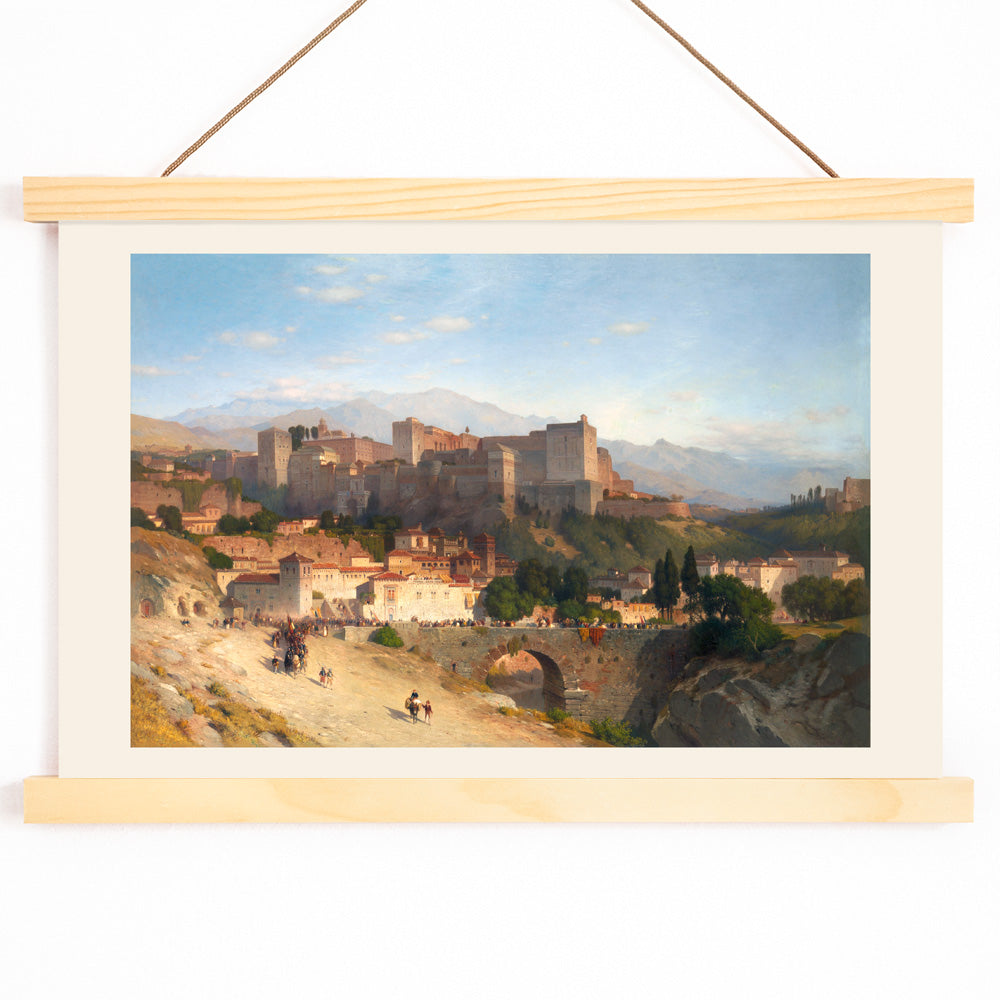
The Hill of the Alhambra was created during a time when Granada captivated artists and intellectuals eager to experience the legacy of Islamic Spain. This artwork reflects the 19th-century fascination with Andalusia as a crossroads of history, culture, and architectural splendor. Colman’s depiction invites viewers to imagine the Alhambra not just as a monument, but as a living landscape shaped by centuries of stories and encounters.
This piece resonates with those drawn to travel, history, and the romantic allure of southern Europe, echoing the era’s spirit of discovery and appreciation for cultural heritage.
Style & Characteristics
The composition presents a peaceful hillside with the Alhambra’s architecture rising above terraced slopes and lush vegetation. Expansive sky and distant views create a sense of openness, while subtle brushwork leads the eye toward the palace structures. The palette features soft blues, greens, earth browns, and warm beige, evoking the gentle light of southern Spain.
The painterly technique and atmospheric perspective lend a tranquil, slightly nostalgic mood, making this fine art print both evocative and timeless—well suited for serene interior spaces.
In Interior Design
As landscape wall art, this print enhances living rooms, studies, or hallways where a sense of calm and depth is desired. Its natural tones and gentle contrasts pair beautifully with linen fabrics, walnut or oak furnishings, and stone accents, complementing both modern and traditional interiors.
It can be harmoniously combined with beige-toned prints and understated architectural photography, creating a cohesive, travel-inspired gallery wall. A light wood or matte black frame will further highlight the artwork’s warmth and subtlety.