




-

"Very nice Posters. The quality is amazing and we received it very quickly !"
-

"A shop to visit absolutely. Huge selection of posters. We spent more than an hour there !"
-

"Perfect to find gift. Price are very good. An they can frame and pack it on site"


About the Artist
Antonie Sminck Pitloo was a Dutch painter who became a leading figure in early 19th-century Italian landscape painting. After settling in Naples, he played a central role in the Posillipo School, which emphasized painting directly from nature and capturing the unique light and atmosphere of southern Italy.
Pitloo’s approach combined the clarity and detail of Northern European art with the warmth and vibrancy of the Italian landscape, making his works highly sought after among collectors of classic art and those interested in the evolution of plein air painting.
The Artwork
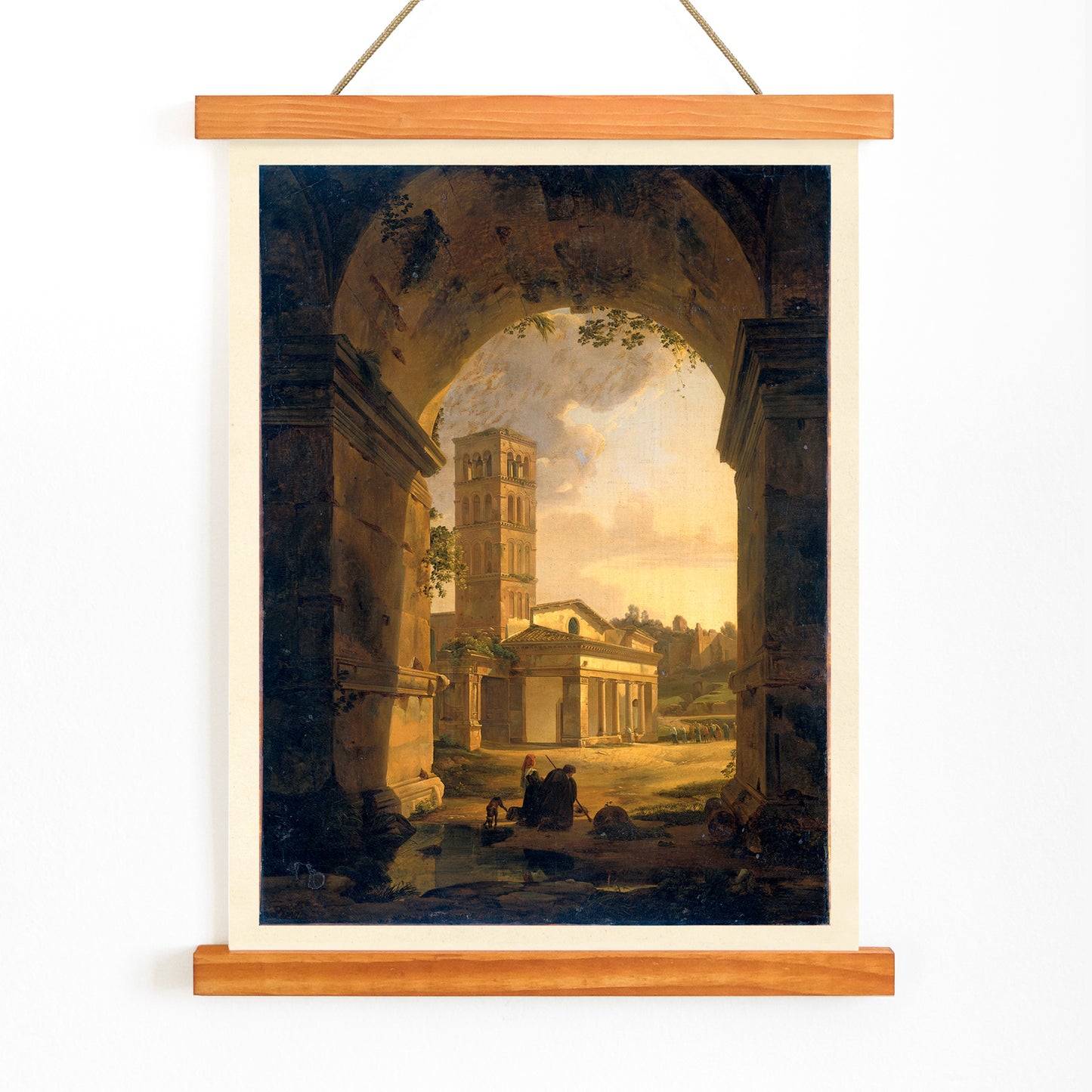
San Giorgio in Velabro reflects the fascination of early 19th-century artists and travelers with Rome’s living history. Painted during the era of the Grand Tour, this scene captures a moment when visitors sought authentic encounters with the city’s ancient and sacred sites, rather than romanticized ruins.
Pitloo’s depiction transforms a recognizable Roman landmark into a lived-in urban space, blending the city’s architectural heritage with the rhythms of daily life. This vintage print embodies how artists of the period translated Rome’s enduring presence into accessible works for study and contemplation.
Style & Characteristics
The composition is anchored by a large, rounded arch that draws the viewer’s gaze into the heart of the scene, while figures stroll beneath, animating the street. Pitloo’s technique balances precise architectural rendering with soft, atmospheric brushwork, conveying the interplay of sunlight and shadow.
The palette features warm earth tones—browns, ochres, and muted yellows—contrasted by deeper accents, giving the print a timeless, sunlit quality. The overall mood is tranquil and contemplative, appealing to admirers of brown tone art and historic cityscapes.
In Interior Design
This Rome poster brings a sense of quiet history and architectural elegance to interiors such as entryways, living rooms, offices, or libraries. It pairs well with natural materials like stone, linen, and dark woods, enhancing both classic and modern spaces.
For a cohesive gallery wall, combine it with other landscape prints or city views in similar tones, using understated frames to echo the artwork’s period charm. It also serves as a striking focal point in minimalist or neutral interiors seeking a touch of old-world character.