




-

"Very nice Posters. The quality is amazing and we received it very quickly !"
-

"A shop to visit absolutely. Huge selection of posters. We spent more than an hour there !"
-

"Perfect to find gift. Price are very good. An they can frame and pack it on site"


About the Artist
George Barbier was a leading French illustrator of the Art Deco era, celebrated for his elegant fashion plates and theatrical scenes that captured the spirit of modern leisure. Active in Parisian publishing and couture circles, Barbier helped shape the refined graphic language that defined luxury magazines and decorative arts in the early 20th century.
His work is noted for its sophisticated blend of illustration and design, often reflecting the cultural aspirations and social rituals of his time. Collectors value Barbier’s creations for their ability to evoke both the glamour and the changing lifestyles of the interwar years.
The Artwork
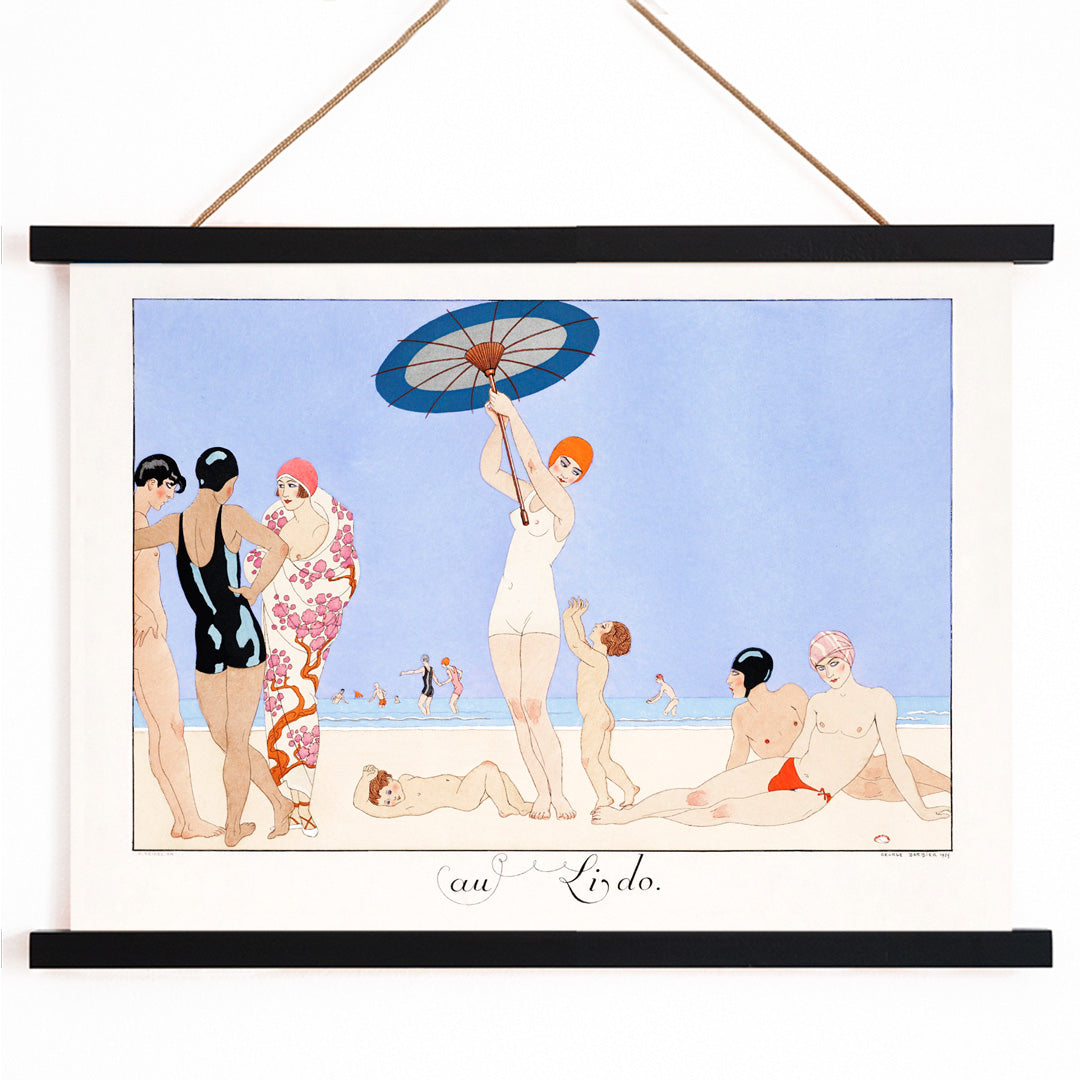
Au Lido, Plate no. 14 was created during a period when seaside resorts like the Lido became fashionable destinations for the European elite. The 1920s saw these coastal retreats transform into stages for new forms of social display, where fashion, leisure, and modern attitudes converged. Barbier’s illustration captures this moment, offering a glimpse into the rituals of elegance and relaxation that defined the era’s beach culture.
Originally conceived as a fashion illustration, this work serves as a visual record of the period’s style and social codes. For admirers of classic art prints and early modern design, it stands as a testament to the interplay between art, fashion, and society in the Art Deco age.
Style & Characteristics
This Art Deco composition is characterized by crisp contour lines and broad, flat areas of color that create a sense of graphic luxury. The elongated figures, parasols, and stylized accessories are arranged in a poised tableau, transforming a beach scene into a choreographed moment of elegance.
Dominated by blue and white tones, the coastal setting is accented with black outlines and touches of red and pink, adding warmth and visual rhythm. The overall mood is breezy yet composed, making this work a distinctive choice for sea and ocean wall art with a Parisian flair.
In Interior Design
As a vintage poster style art print, Au Lido complements living rooms, bedrooms, dressing areas, and bathrooms where a refined coastal accent is desired. It pairs well with Art Deco interiors, Parisian-inspired spaces, and modern rooms that appreciate narrative illustration.
For a harmonious look, coordinate with ivory walls, deep navy accents, lacquered black furniture, or soft blush textiles. Consider displaying it alongside other blue tone prints or enhancing its presentation with curated frames to highlight its crisp lines and color blocks.