




-

"Very nice Posters. The quality is amazing and we received it very quickly !"
-

"A shop to visit absolutely. Huge selection of posters. We spent more than an hour there !"
-

"Perfect to find gift. Price are very good. An they can frame and pack it on site"


About the Artist
Alexander Rothaug was an Austrian artist and illustrator known for his disciplined draftsmanship and his interest in the expressive potential of the human figure. Active in the early twentieth century, Rothaug worked at the intersection of art, education, and modern design, where anatomical studies played a key role in both artistic and scientific circles.
This 1933 poster reflects a time when the study of human movement and form was gaining importance in both art and pedagogy, influenced by new approaches to physical education and the rise of instructional visual aids.
The Artwork
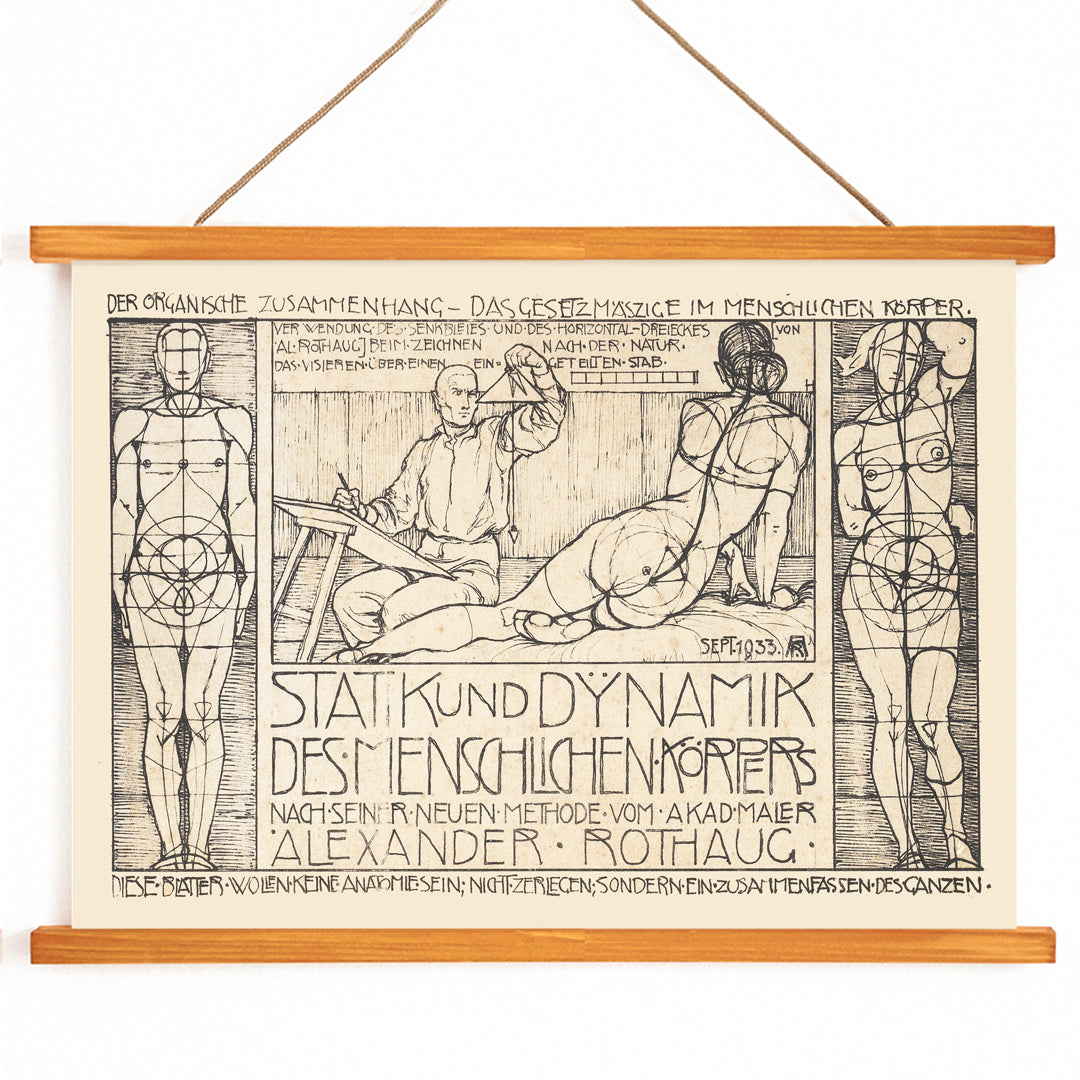
Static and dynamic of the human body 1 was created during an era when artists and educators sought to analyze and teach the mechanics of the human body. The early twentieth century saw a growing interest in understanding posture, balance, and movement, not just for artists but also for athletes, dancers, and students of anatomy.
This vintage print was likely intended as a teaching chart, emphasizing the body as a system that could be studied, understood, and improved. Its presence in classrooms and studios would have supported a modern, analytical approach to both art and physical training.
Style & Characteristics
The composition features a single male figure, rendered in precise black linework, overlaid with geometric guides that highlight axes, proportions, and movement. The palette is restrained, using black ink on a warm beige background, which enhances the clarity and instructional quality of the image.
The overall mood is calm and analytical, blending the sensibility of an atelier sketch with the structure of a schematic diagram. This style aligns well with works in the science posters and Bauhaus collection, and it complements black and white wall decor for a cohesive gallery wall.
In Interior Design
This human body study poster brings a sense of focus and intellect to offices, studios, or training spaces. Its vintage print character fits minimalist interiors, mid-century furnishings, and contemporary rooms that value structure and rhythm.
Pair it with linen, oak, or soft stone tones for visual harmony, or echo its warmth with pieces from the beige art prints selection. It appeals to design enthusiasts, anatomy students, dancers, and anyone curating a thoughtful home decor story around form and function.