




-

"Very nice Posters. The quality is amazing and we received it very quickly !"
-

"A shop to visit absolutely. Huge selection of posters. We spent more than an hour there !"
-

"Perfect to find gift. Price are very good. An they can frame and pack it on site"


About the Artist
Édouard Bénédictus was a French designer and chemist whose innovative approach helped shape the Art Deco movement of the early twentieth century. With a background in science, Bénédictus brought analytical precision to decorative arts, creating patterns that balanced modernity with natural inspiration. His influential pattern books became essential resources for architects, textile manufacturers, and interior decorators seeking fresh motifs for a changing world.
Bénédictus’s work bridged the gap between fine art and functional design, embodying the Art Deco ethos of beauty in everyday objects. His designs reflect the optimism and dynamism of 1920s Paris, where artistic experimentation flourished in both studios and workshops.
The Artwork
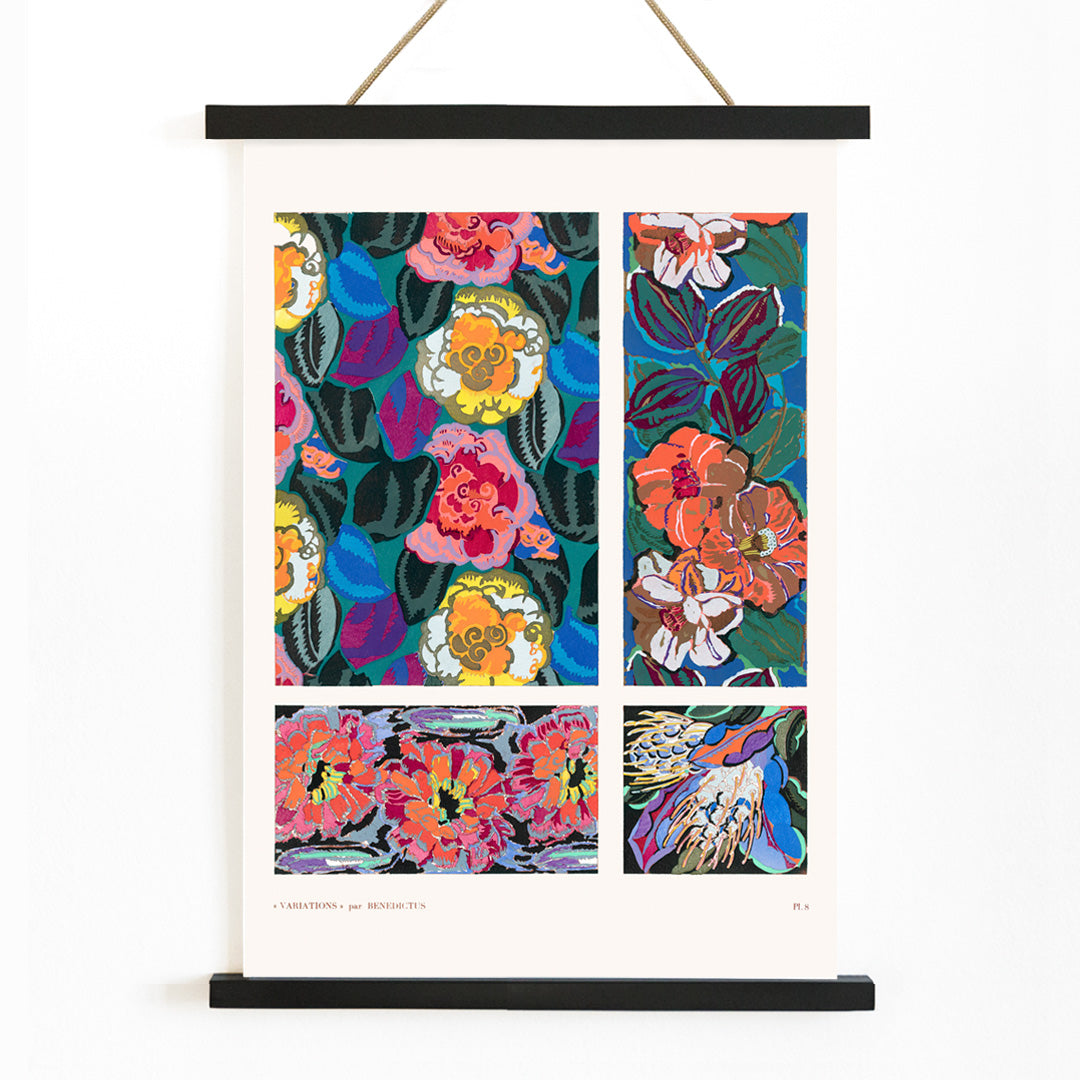
Created in 1928, Geometric floral motifs 8 emerged during a period when decorative art was redefining modern interiors. Rather than depicting a realistic bouquet, Bénédictus transformed the flower into a modular, stylized emblem—ideal for adaptation across textiles, wallpapers, and book covers. This approach allowed his patterns to become versatile design tools, spreading the Art Deco vision of harmony and order into daily life.
The artwork’s rhythmic repetition and abstracted forms reflect a belief that ornament could be both functional and uplifting, echoing the era’s desire to integrate art seamlessly into modern living spaces.
Style & Characteristics
This composition features bold, stylized blossoms and leaf-like shapes arranged in a symmetrical, grid-like pattern. The design uses flat, unmodulated areas of color—vivid blues, pinks, yellows, greens, and orange accents—outlined by crisp, dark contours. The interplay of clear geometry and lively hues creates a graphic impact that is both energetic and refined.
The overall mood is bright and sophisticated, making it especially appealing to those who appreciate abstract wall art with botanical influences and the clarity of classic Art Deco design. The print’s visual rhythm and color harmony evoke a sense of order and modern elegance.
In Interior Design
This fine art print is well-suited for spaces where structure and vibrancy are desired, such as entryways, living rooms, or creative workspaces. Its repeating motif pairs naturally with modern or mid-century furnishings, and it complements the clean lines of Bauhaus-inspired decor in a curated gallery wall.
For a cohesive look, echo one or two colors from the print in textiles or ceramics, while keeping surrounding surfaces neutral to let the pattern stand out. It also harmonizes beautifully with botanical prints, creating a dialogue between stylized ornament and natural forms in interior decoration.