




-

"Very nice Posters. The quality is amazing and we received it very quickly !"
-

"A shop to visit absolutely. Huge selection of posters. We spent more than an hour there !"
-

"Perfect to find gift. Price are very good. An they can frame and pack it on site"


About the Artist
Kazumasa Ogawa was a pioneering figure in Meiji era Japanese photography, renowned for his mastery of the collotype process. As both a photographer and publisher, Ogawa played a crucial role in introducing new photographic techniques to Japan and bridging Western technology with Japanese artistic sensibilities.
His work often explored the intersection of modern image-making and traditional aesthetics, particularly through the refined hand-coloring of his prints. Ogawa’s legacy endures as a testament to the harmonious blending of innovation and craft during a transformative period in Japanese art history.
The Artwork
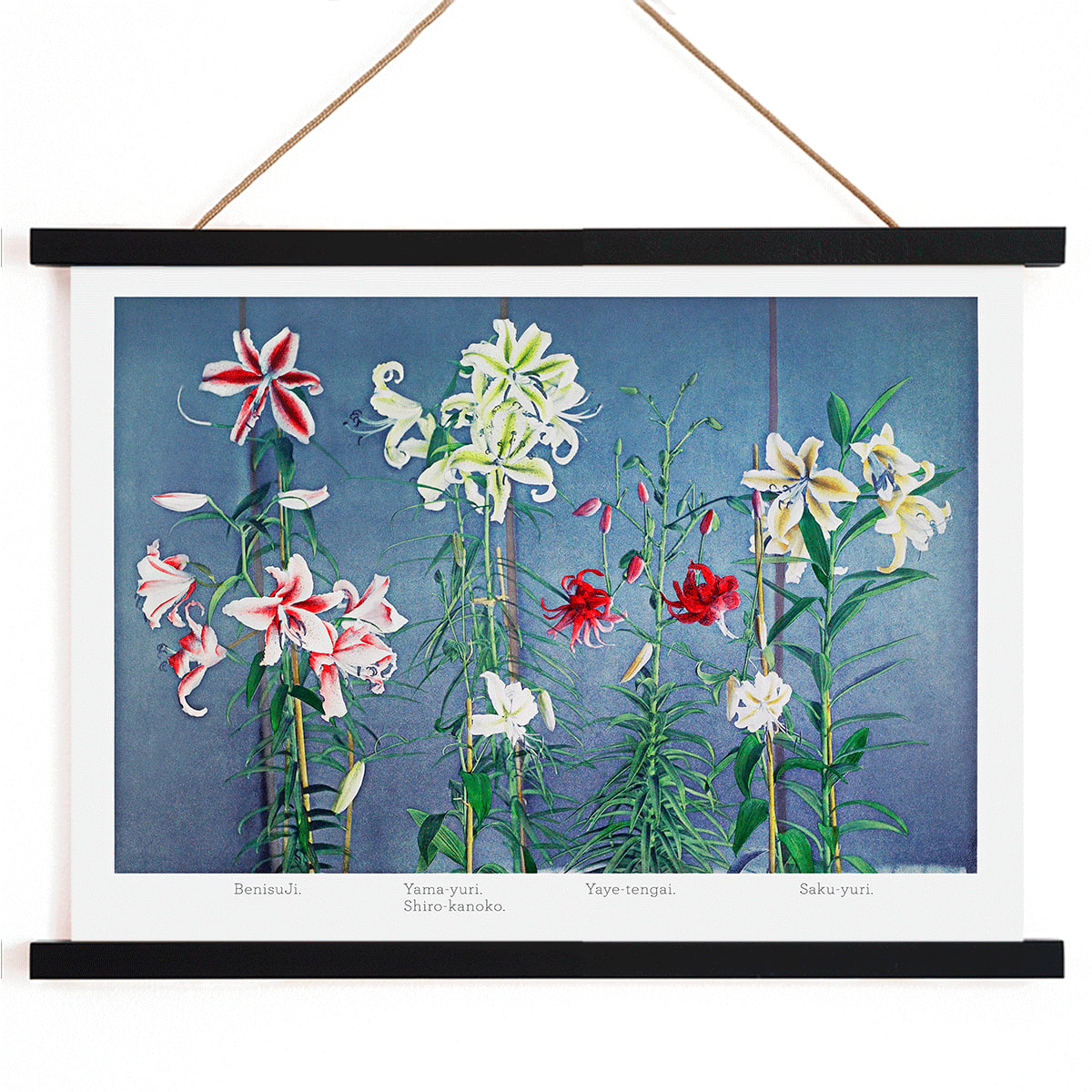
Created in 1896, this depiction of lilies reflects the Meiji era’s fascination with botanical subjects as both scientific study and objects of beauty. During this time, flower prints like this served as cherished keepsakes for collectors and travelers, capturing the delicate forms of nature amid rapid societal change.
The lily, a symbol of purity and renewal in many cultures, was a fitting subject for Ogawa’s approach. This artwork embodies the quiet contemplation and appreciation for natural beauty that characterized much of the era’s visual culture, offering a serene counterpoint to the pace of modernization.
Style & Characteristics
The composition centers on a tall, graceful spray of lilies, their elongated leaves and open blossoms rendered with photographic clarity. Soft hand-applied color brings out creamy whites in the petals and subtle pastel greens in the stems and foliage, set against a pale, uncluttered background.
Ogawa’s technique combines precise photographic detail with painterly tinting, resulting in an image that feels both luminous and tranquil. The overall effect is one of calm elegance, making it a quintessential example of Meiji period botanical art. For related works, explore vintage photography prints and botanical wall art.
In Interior Design
This lily print lends a sense of quiet sophistication to bedrooms, reading nooks, or serene living spaces. Its gentle palette pairs well with light woods, natural fibers, and minimalist decor, making it ideal for Japandi or classic interiors.
To create visual harmony, complement the artwork with white or beige walls and subtle green or blush accents. It also integrates beautifully into a gallery wall alongside other Japanese inspired prints, adding a refined vintage note to contemporary settings.