




-

"Very nice Posters. The quality is amazing and we received it very quickly !"
-

"A shop to visit absolutely. Huge selection of posters. We spent more than an hour there !"
-

"Perfect to find gift. Price are very good. An they can frame and pack it on site"


About the Artist
Carl Friedrich Philipp von Martius was a German botanist and illustrator whose explorations in Brazil and South America greatly advanced European botanical knowledge. His landmark publication, Historia Naturalis Palmarum, documented palm species with unprecedented scientific rigor and artistic sensitivity. Martius’s plates are now prized by collectors for their blend of accuracy and elegance, often featured in science and botanical art collections.
His work reflects the spirit of nineteenth-century discovery, when botanical illustration bridged the worlds of science and art.
The Artwork
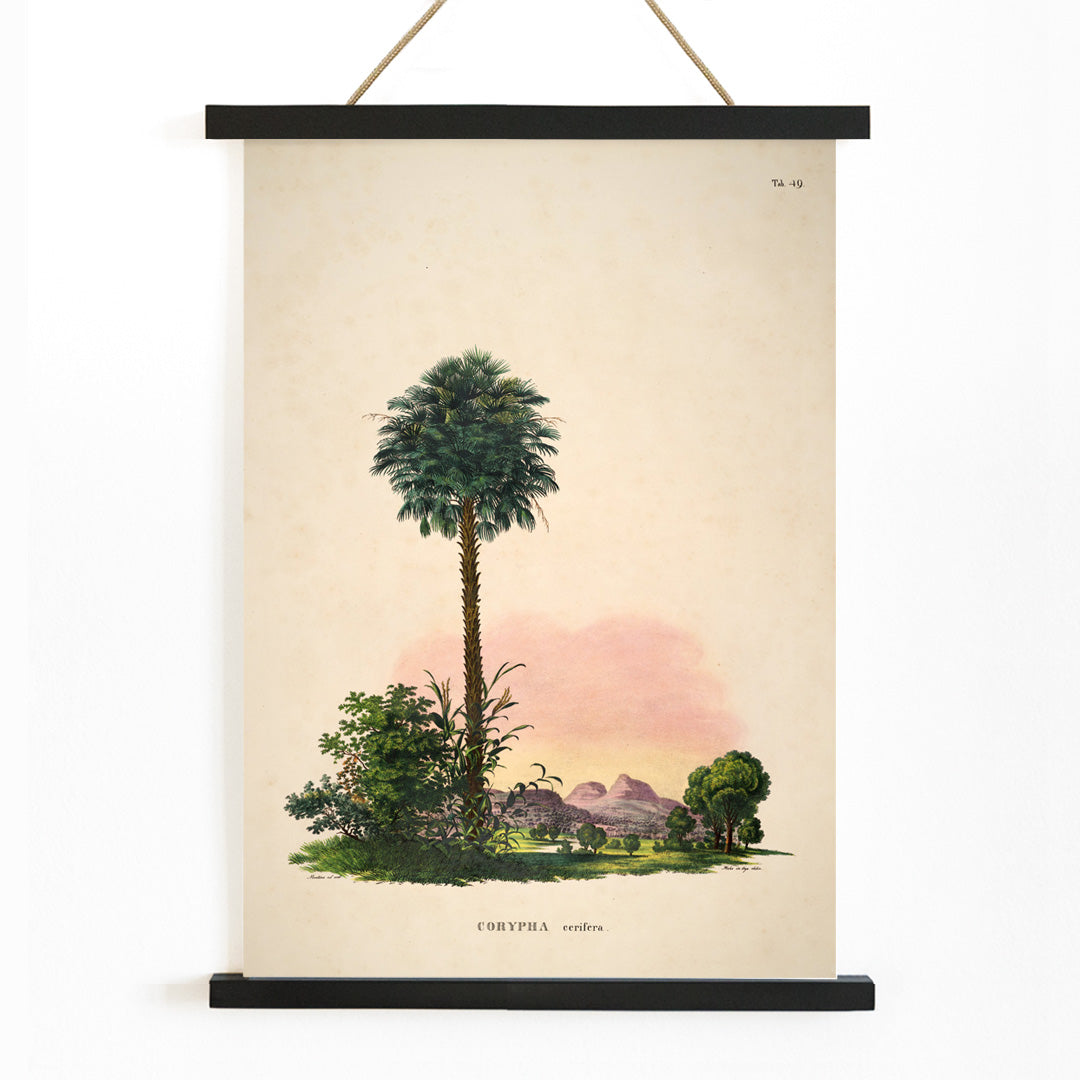
This 1823 plate depicts Corypha cerifera, a palm species significant in historical botany for its resilience and utility in tropical regions. Created during a period when European interest in exotic plants was at its peak, such illustrations served as essential references for botanists, gardeners, and collectors. The artwork embodies the era’s fascination with cataloguing the natural world and making scientific knowledge accessible through visual means.
It stands as a testament to the importance of botanical illustration in shaping both scientific understanding and aesthetic appreciation.
Style & Characteristics
The composition features a tall palm rendered with meticulous botanical detail, including a full plant view and smaller inset studies highlighting structural elements. Fine linework articulates the trunk and the fan-like arrangement of leaves, while subtle shading lends depth and realism. The color palette consists of natural greens and muted browns set against warm beige paper, with delicate accents that enliven the image without overwhelming it.
The overall effect is orderly and tranquil, making this vintage print a refined choice for those who appreciate both scientific illustration and timeless design.
In Interior Design
This botanical print enhances serene interiors such as living rooms, bedrooms, and workspaces, where a sense of calm focus is desired. It pairs beautifully with light woods, linen, and stone, and suits modern, Scandinavian, or classic decor. For harmonious styling, coordinate with sage green textiles, creamy whites, or sand-toned ceramics, or integrate it into a gallery wall of beige and botanical art for a cohesive look.
Whether displayed alone in a simple frame or grouped with other vintage prints, it brings a quiet sophistication to any space.