




-

"Very nice Posters. The quality is amazing and we received it very quickly !"
-

"A shop to visit absolutely. Huge selection of posters. We spent more than an hour there !"
-

"Perfect to find gift. Price are very good. An they can frame and pack it on site"


About the Artist
Gustav Klimt was a central figure in the Viennese Secession, renowned for transforming portraiture with his fusion of symbolism, ornament, and psychological insight. By 1913, Klimt’s mature style was defined by his intricate patterns and a unique approach to depicting his sitters, blending realism with decorative abstraction. His portraits from this period reflect both the aspirations of his patrons and the cultural dynamism of early twentieth-century Vienna.
Klimt’s work continues to resonate with admirers of famous artist wall art, who are drawn to his ability to balance human presence with elaborate design. This fine art print exemplifies his late-career focus on society portraiture, where individuality and decorative richness coexist.
The Artwork
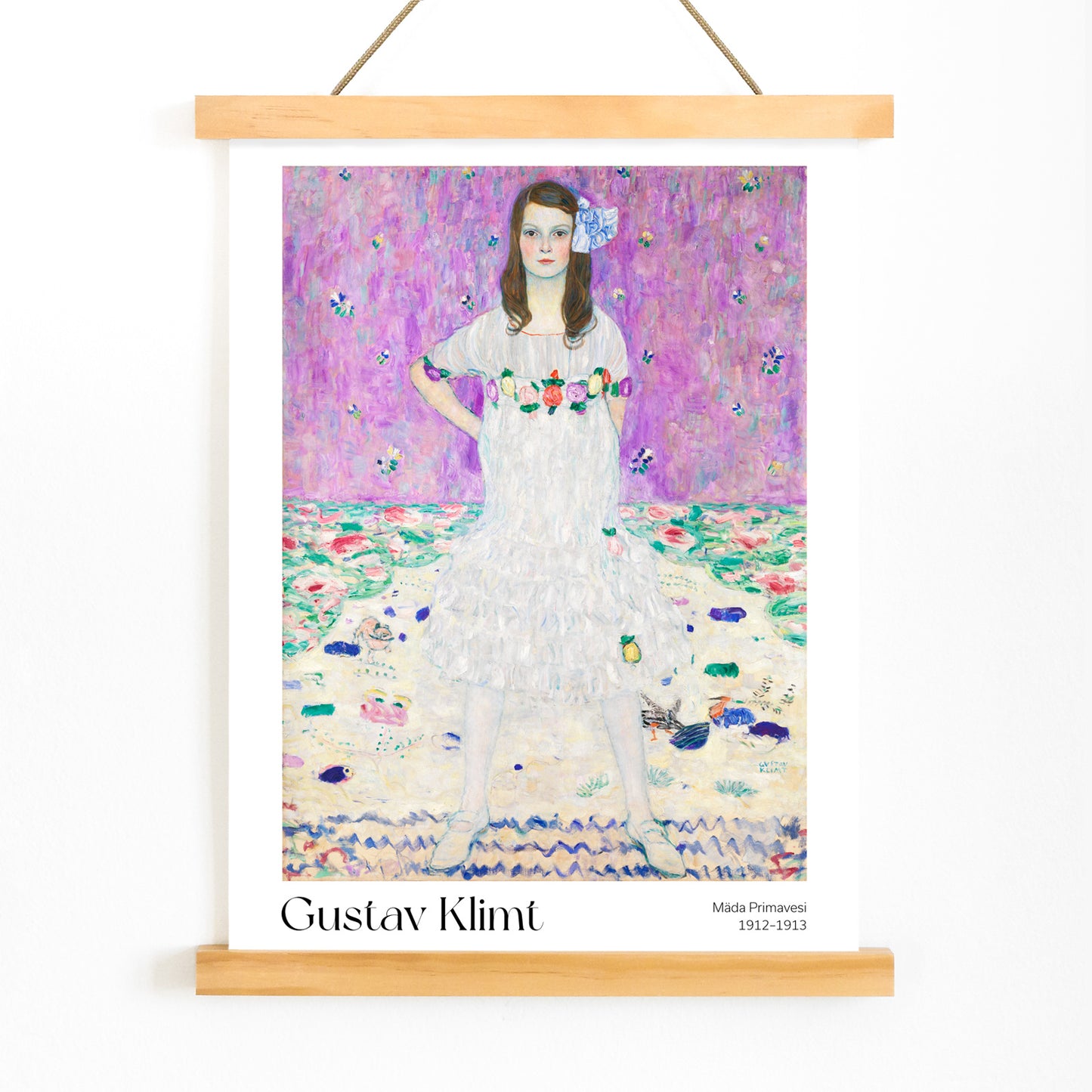
Commissioned by the Primavesi family, Mäda Primavesi was painted during a time when Vienna was a hub of artistic innovation and social change. The portrait was intended to convey both the innocence and the social standing of the young sitter, reflecting the family’s progressive values and their place in Viennese society.
This artwork is part of Klimt’s exploration of how portraiture could serve as both a personal record and a statement of cultural identity. Painted just before the First World War, it captures a moment of optimism and elegance at the close of the Austro-Hungarian Empire.
Style & Characteristics
The composition features Mäda standing confidently at the center, her white dress adorned with delicate patterns that echo the vibrant floral motifs filling the background. Klimt’s palette is luminous, with crisp whites set against saturated purples, greens, and pinks, creating a lively and harmonious effect.
The artist’s signature use of decorative detail is evident in the richly textured surfaces and the interplay between the figure and her ornate surroundings. The overall mood is poised and celebratory, making this art print a striking example of Klimt’s decorative yet psychologically nuanced style.
In Interior Design
This portrait art print is well-suited for living rooms, bedrooms, or sophisticated home offices, where its presence can anchor a space with both color and narrative. It pairs beautifully with classic art prints and complements contemporary interiors that favor clean lines and bold patterns.
For a cohesive look, consider soft white walls and accents in pink or green textiles to echo the artwork’s palette. This piece appeals to those curating a vintage-inspired or story-rich gallery wall, adding both elegance and historical depth to the decor.