




-

"Very nice Posters. The quality is amazing and we received it very quickly !"
-

"A shop to visit absolutely. Huge selection of posters. We spent more than an hour there !"
-

"Perfect to find gift. Price are very good. An they can frame and pack it on site"


About the Artist
Arthur Edward Waite was a British occult scholar and writer, best known for his collaboration on the Rider Waite tarot deck in the early twentieth century. Deeply involved with the Hermetic Order of the Golden Dawn, Waite played a pivotal role in shaping modern Western esoteric traditions. His work aimed to make mystical symbolism accessible to a broader audience, and his guidance was instrumental in defining the meanings and structure of the tarot deck.
For the 1910 tarot publication, Waite provided the conceptual framework and interpretations, while artist Pamela Colman Smith brought the cards to life visually. Their partnership resulted in a deck that remains one of the most influential and widely recognized in tarot history, inspiring countless adaptations and interpretations.
The Artwork
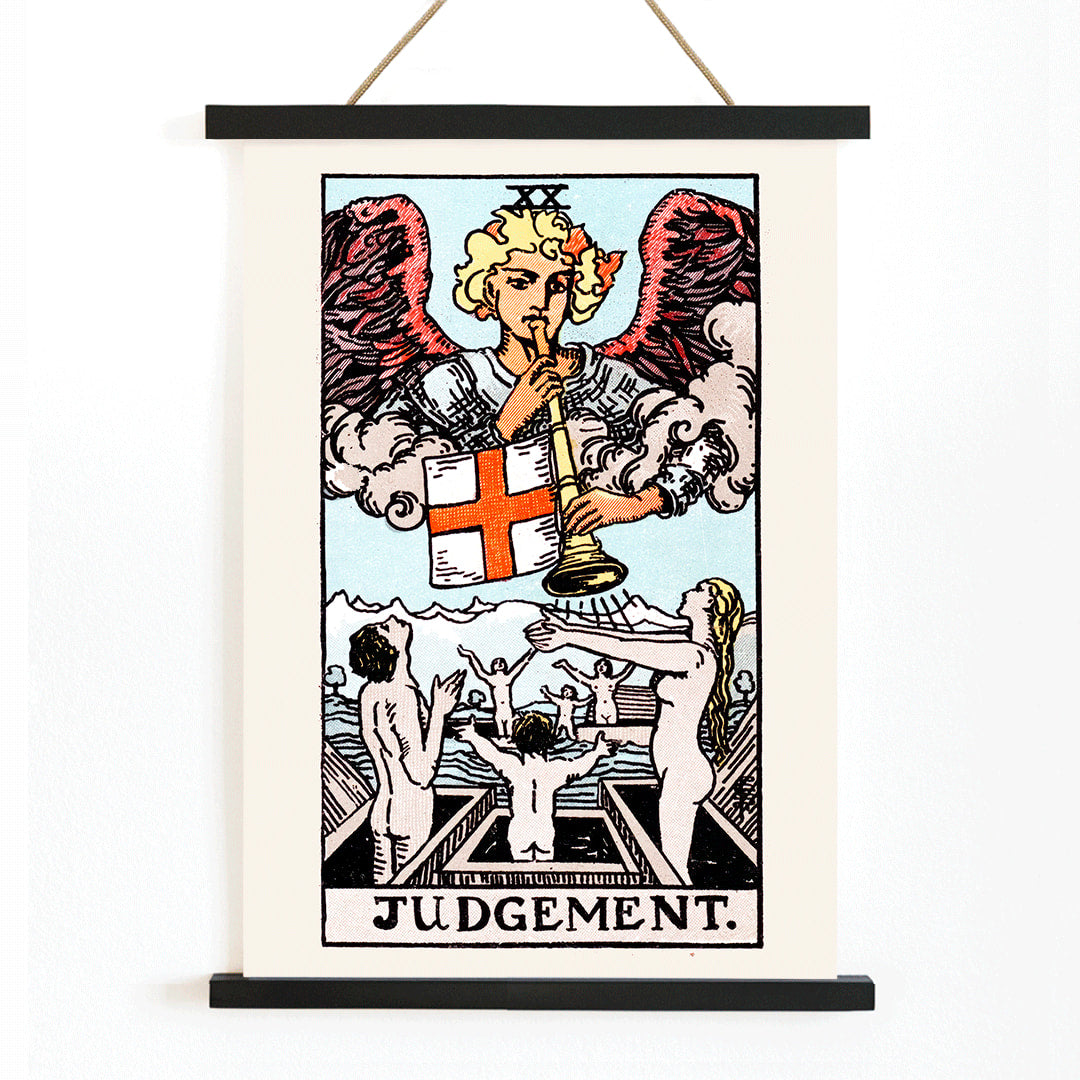
The Judgement card represents a moment of awakening and transformation—a call to reflect honestly on the past and embrace renewal. In tarot readings, this card signals a turning point, inviting individuals to move forward with clarity and purpose. Created during a period of fascination with spiritualism and psychological symbolism, the Rider Waite deck helped standardize tarot imagery for English-speaking audiences.
This 1910 design continues to resonate as esoteric wall art, symbolizing themes of rebirth and second chances. Its enduring presence reflects the era's search for meaning and the enduring appeal of symbolic storytelling in art.
Style & Characteristics
The composition features an angel blowing a golden trumpet above figures rising from rectangular coffins, set against a backdrop of blue water and distant mountains. Strong black outlines and simplified forms give the image a graphic, poster-like clarity, making it easily recognizable from afar.
The palette is dominated by luminous whites and cool blues, accented by vivid reds and yellows. The atmosphere is both solemn and uplifting, capturing the card's message of hope and transformation. This fine art print stands out within classic art traditions and complements a range of interior styles.
In Interior Design
This vertical tarot poster is well-suited for studies, meditation spaces, or entryways, where its theme of renewal sets a reflective mood. It pairs harmoniously with minimalist, eclectic, or vintage-inspired interiors, especially those featuring blue and white tones.
For a cohesive gallery wall, consider combining it with monochrome line art, antique illustrations, or other symbolic prints. A simple black or light wood frame enhances its crisp imagery, while exploring vertical posters can help create a balanced display.