




-

"Very nice Posters. The quality is amazing and we received it very quickly !"
-

"A shop to visit absolutely. Huge selection of posters. We spent more than an hour there !"
-

"Perfect to find gift. Price are very good. An they can frame and pack it on site"


About the Artist
Katsushika Hokusai was a master of Japanese ukiyo-e, renowned for transforming everyday landscapes into iconic works of art. Active in Edo during a flourishing period of urban culture, Hokusai continually pushed the boundaries of woodblock printmaking, especially in his explorations of nature and scenery.
His innovative approach influenced not only Japanese art but also inspired the European Japonisme movement in the 19th century. For those interested in the enduring legacy of Japanese printmakers, more can be found in our famous artists collection.
The Artwork
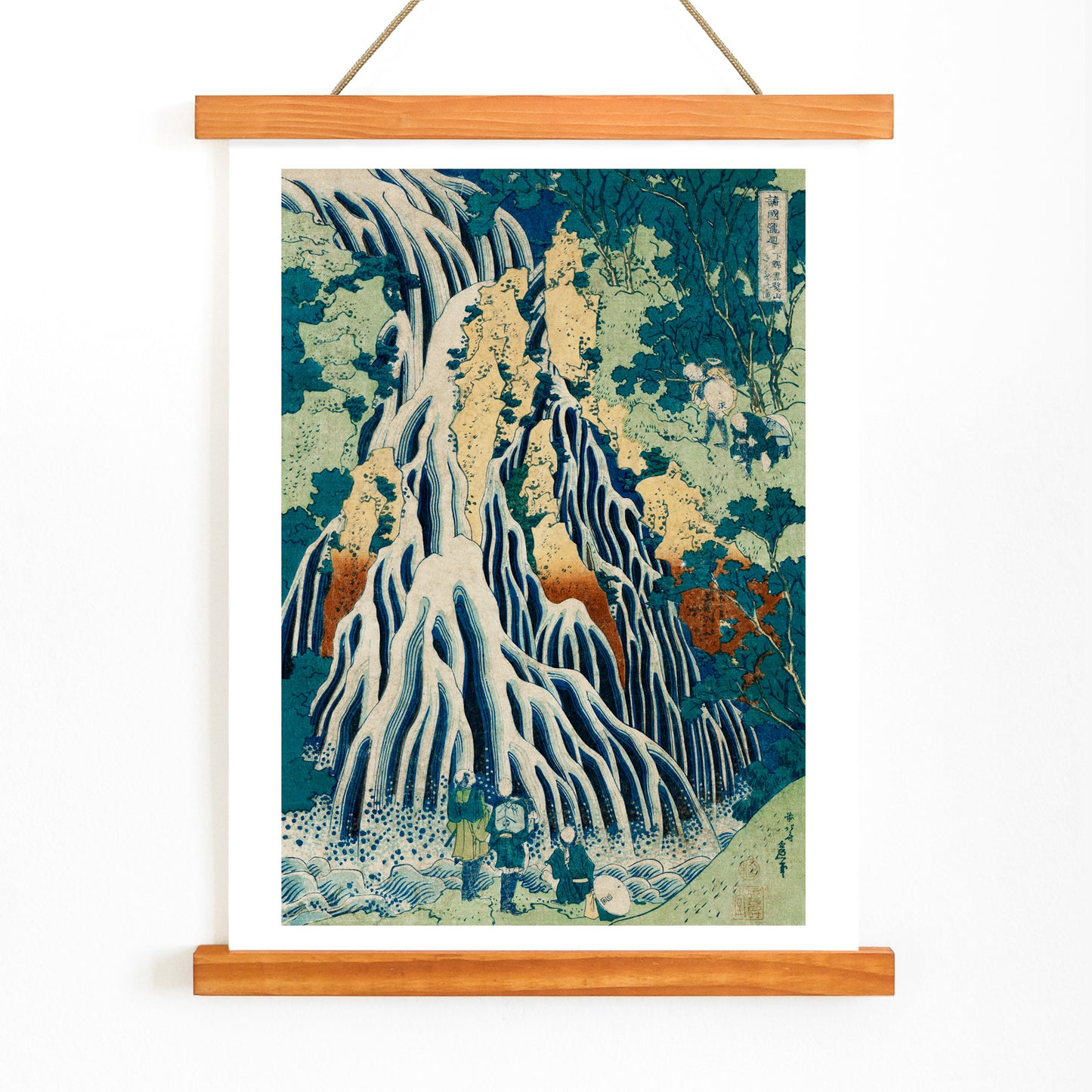
Shimotsuke Kurokami-Yama Kurifuri no Taki is part of Hokusai’s celebrated waterfall series, created at a time when travel and pilgrimage were popular among Edo’s urban population. The print captures a real location in Shimotsuke Province, reflecting both the fascination with famous sites and a deeper reverence for the power of nature.
Waterfalls in Japanese tradition symbolize purification and spiritual renewal, often associated with mountain worship and the awe of remote landscapes. This work embodies a sense of journey and contemplation, connecting viewers to the spiritual and cultural landscape of early 19th-century Japan. Explore more Japanese-themed works in our oriental collection.
Style & Characteristics
The print features a striking vertical layout, emphasizing the sheer drop and energy of the waterfall. Hokusai uses bold outlines and flat areas of color characteristic of ukiyo-e, with the waterfall rendered in cool blues and blue-greens that stand out against the warm beige of the paper.
Small figures at the base of the falls provide a sense of scale and narrative, highlighting the grandeur of the natural setting. Subtle gradations and delicate lines evoke the mist and movement of water, creating a dynamic yet serene atmosphere. Discover more blue-toned artworks in our blue collection.
In Interior Design
This vintage print brings a sense of movement and tranquility to living rooms, bedrooms, or entryways. Its harmonious palette and vertical composition make it ideal for minimalist, Japandi, or coastal interiors, especially when paired with light woods and natural textures.
Use this artwork to introduce a calming blue accent or to complement muted greens and off-whites. It also enhances spaces dedicated to reflection, such as studies or meditation corners, where its serene energy supports a peaceful atmosphere.