


You may also like
-

Man's side and arm Poster
Reijer Jan Stolk · 1922 · Expressive anatomical scientific print of a male torso cropped in stark black on beige
Poster from CHF 9 · Framed from CHF 16
-

Back Muscles 2 Poster
Reijer Stolk · 1932 · Precise anatomical scientific print mapping back muscles in crisp black line on beige
Poster from CHF 9 · Framed from CHF 16
-

Chest Muscles Poster
Reijer Stolk · 1930 · Crisp anatomical scientific print mapping chest musculature with clean black linework on beige
Poster from CHF 9 · Framed from CHF 16
-

Back Muscles Poster
Reijer Hooykaas Stolk · 1930 · Detailed back anatomy scientific print with labeled muscles in crisp black linework
Poster from CHF 9 · Framed from CHF 16


-

"Very nice Posters. The quality is amazing and we received it very quickly !"
-

"A shop to visit absolutely. Huge selection of posters. We spent more than an hour there !"
-

"Perfect to find gift. Price are very good. An they can frame and pack it on site"


About the Artist
Reijer Jan Stolk was a Dutch artist and printmaker active in the early twentieth century, recognized for his disciplined draftsmanship and analytical approach to form. His work often explored the human figure as a system of interrelated structures, reflecting a deep interest in anatomy and design rather than idealized beauty.
This perspective placed Stolk within the pragmatic, study-driven spirit of interwar European art, where observation and scientific inquiry shaped artistic practice. For those interested in focused figurative works, this piece complements selections from our classic art prints.
The Artwork
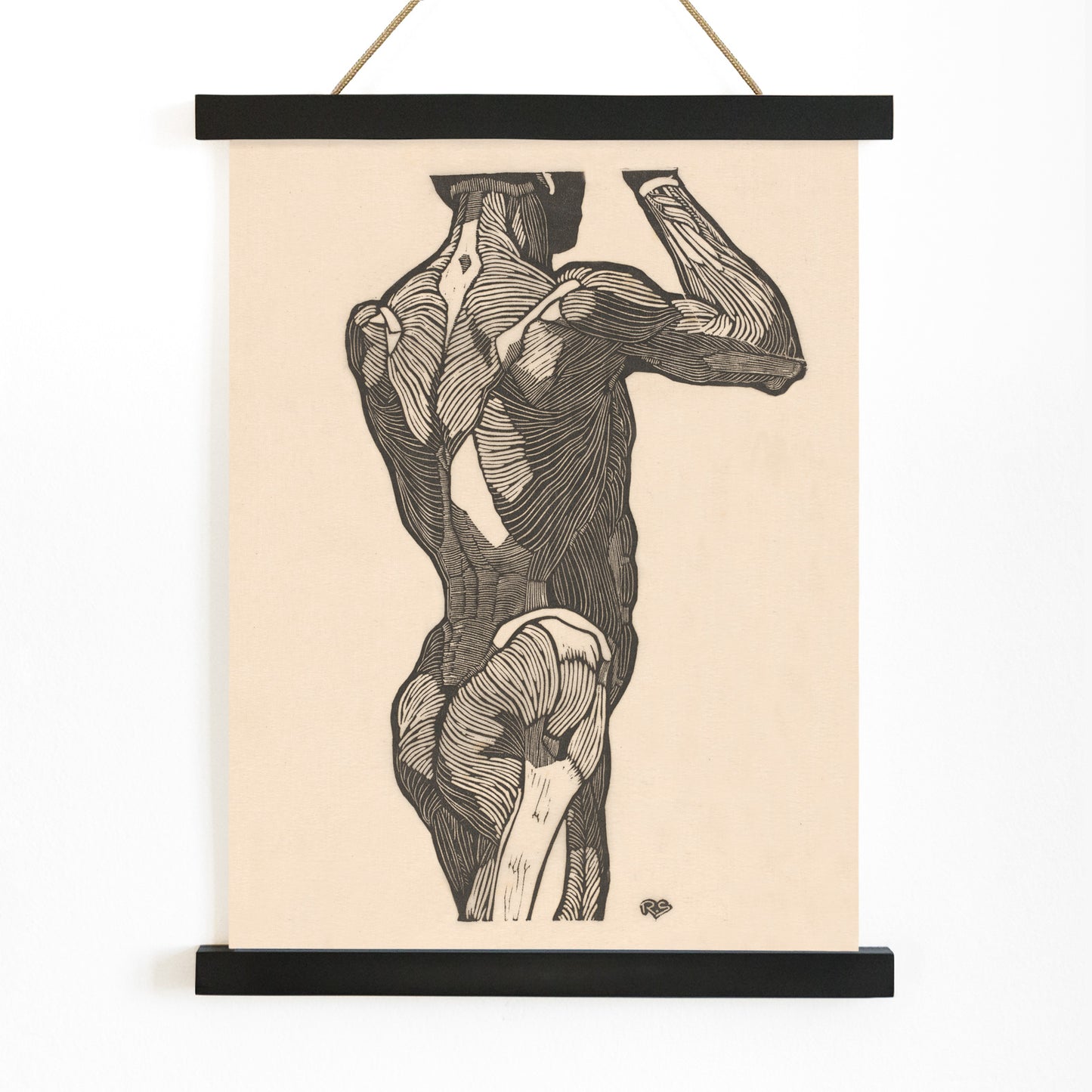
Created in 1930, Glute Muscles is part of the tradition of anatomical plates designed for educational and artistic reference. Intended to convey anatomical knowledge, the print illustrates the structure and function of the gluteal muscles, serving artists, students, and medical professionals alike.
This work emerged during a period when society increasingly viewed the body through the lens of efficiency, health, and modern science. Rather than telling a narrative, the image acts as a visual tool, reflecting a cultural shift toward understanding the body as both architecture and mechanism. It appeals to those fascinated by the intersection of art, science, and human anatomy, and pairs well with our science collection.
Style & Characteristics
The composition presents a single, focused anatomical study against an uncluttered background, emphasizing clarity and precision. Fine black contour lines and subtle shading define the muscle groups, lending the forms sculptural depth while maintaining legibility from a distance.
The restrained palette features crisp black linework on a warm beige ground, evoking an archival and timeless quality. The overall mood is clinical yet refined, making it a fitting choice for interiors that appreciate accuracy and understated elegance.
In Interior Design
This scientific print is well suited to spaces that value curiosity and craftsmanship, such as home offices, studios, hallways, or gym corners. Its neutral tones harmonize with light woods, concrete, and matte black accents, and it pairs seamlessly with photography, technical drawings, or minimalist decor.
For a cohesive look, combine it with warm whites, sand, and charcoal, or frame it in black or natural oak for a museum-inspired finish. To explore more monochrome wall art, browse our black and white collection.