


You may also like
-

Head by head Poster
Edvard Munch · 1905 · Intimate Expressionist poster of two abstracted heads pressed closely together in warm tones
Poster from CHF 9 · Framed from CHF 16
-
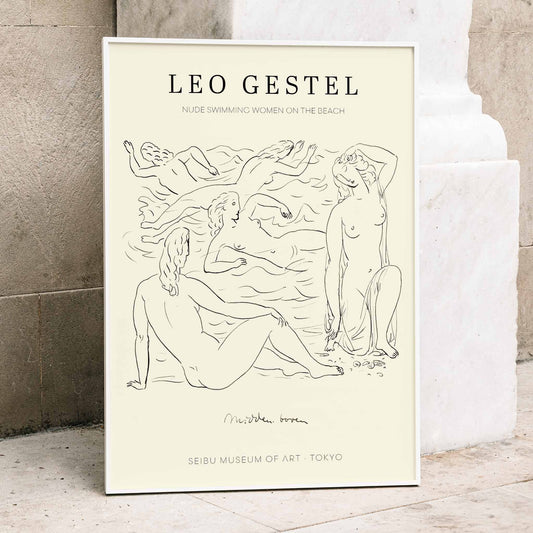
Nude women swimming Poster
Leo Gestel · 1925 · Expressive black-and-white poster of nude swimmers rendered in bold, fluid lines
Poster from CHF 9 · Framed from CHF 16
-

L’Eau Poster
George Barbier · 1924 · Elegant Art Deco poster of waterside leisure in vivid blue with pink accents
Poster from CHF 9 · Framed from CHF 16
-

Beach at Cabasson Poster
Henri-Edmond Cross · 1891 · Sunlit beach art print with children at the shoreline and shimmering Mediterranean blues
Poster from CHF 9 · Framed from CHF 16


-

"Very nice Posters. The quality is amazing and we received it very quickly !"
-

"A shop to visit absolutely. Huge selection of posters. We spent more than an hour there !"
-

"Perfect to find gift. Price are very good. An they can frame and pack it on site"


About the Artist
Edvard Munch, born in Norway in 1863, is recognized as a pioneer of modern art whose emotionally charged works bridged Symbolism and early Expressionism. While Munch is best known for exploring psychological themes, his art often draws from his experiences of nature and the Norwegian coast, reflecting a deep engagement with memory and the cycles of life.
Throughout his career, Munch experimented with both painting and printmaking, seeking to express the inner life and fleeting sensations rather than external reality. His nuanced approach to everyday subjects, such as seaside scenes, reveals a quieter, contemplative side of his vision that continues to resonate with admirers of European modernism.
The Artwork
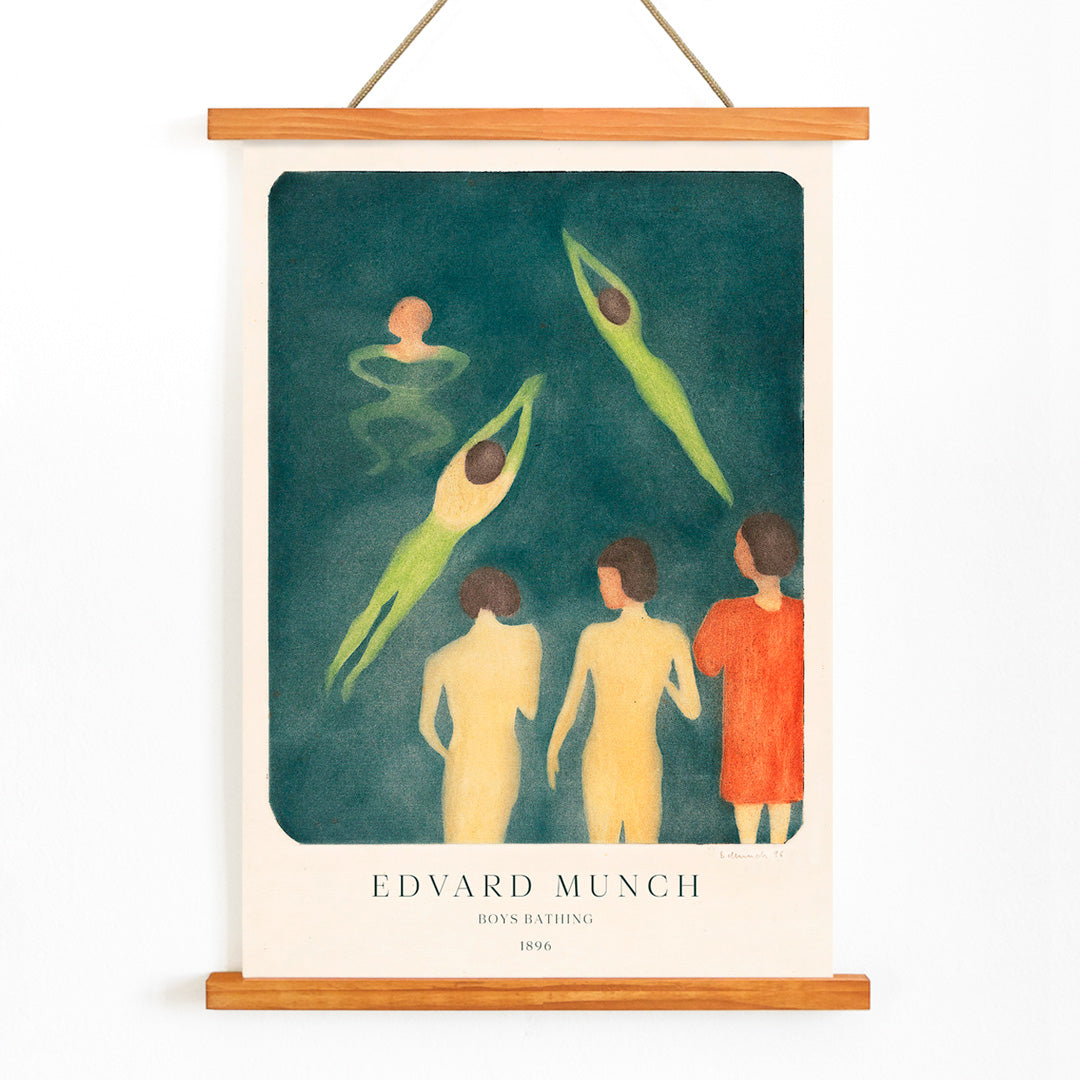
Boys Bathing was created during a period when seaside leisure was becoming a symbol of health and modernity in late nineteenth-century Europe. Munch captures the innocence and camaraderie of youth, depicting boys gathered at the water's edge, immersed in the simple joys of summer.
This work reflects the artist's interest in themes of vitality, renewal, and the passage of time. Rather than presenting a straightforward narrative, Munch evokes a sense of nostalgia and timelessness, inviting viewers to recall their own memories of carefree days by the sea. The print embodies the spirit of Scandinavian summers and the restorative power of nature.
Style & Characteristics
The composition features softly blurred forms and gentle contours, emphasizing atmosphere over precise detail. Figures are arranged along the shoreline, their bodies rendered in loose, painterly strokes that blend into the surrounding landscape. The color palette is dominated by muted blues and greens, complemented by sandy beige tones and subtle hints of red.
This dreamlike quality is enhanced by the hazy transitions between land, water, and sky, creating a tranquil, contemplative mood. The print harmonizes beautifully with other blue toned wall art or sea and ocean posters, making it a versatile choice for serene and modern interiors.
In Interior Design
This art print lends a restful, airy presence to bedrooms, bathrooms, or quiet reading spaces, where its subdued coastal mood can promote relaxation. Its understated elegance suits Scandinavian, minimalist, and modern organic interiors, and it pairs well with pale woods, natural linens, and soft ceramics.
For a cohesive look, combine it with blue-green accents or black frames for added contrast. It also fits seamlessly into a famous artists wall art collection, offering a touch of art history with a gentle, inviting atmosphere.