


You may also like
-
Falbalas et fanfreluches: La paresse Poster
George Barbier · 1925 · Art Deco fashion print featuring a reclining woman in bold pochoir colors
Poster from CHF 9 · Framed from CHF 16
Regular price From CHF 6.00Regular price -
La Vasque Poster
George Barbier · 1914 · Elegant Art Deco bathing scene poster with cool blues and warm orange accents
Poster from CHF 9 · Framed from CHF 16
Regular price From CHF 6.00Regular price -
Falbalas et fanfreluches - Orgueil Poster
George Barbier · 1925 · Art Deco fashion poster with a poised woman in bold yellow and black tones
Poster from CHF 9 · Framed from CHF 16
Regular price From CHF 6.00Regular price -
La Luxure Poster
George Barbier · 1924 · Sensual Art Deco print featuring stylized nude figures framed by lush garden motifs
Poster from CHF 9 · Framed from CHF 16
Regular price From CHF 6.00Regular price


-

"Very nice Posters. The quality is amazing and we received it very quickly !"
-

"A shop to visit absolutely. Huge selection of posters. We spent more than an hour there !"
-

"Perfect to find gift. Price are very good. An they can frame and pack it on site"


About the Artist
George Barbier was a leading French illustrator of the early Art Deco era, celebrated for bringing fashion, theatre, and modern luxury into refined graphic form. Working for elite magazines and deluxe illustrated books, he shaped the look of Parisian taste just after the First World War.
His images balance elegance with theatrical fantasy, making them enduring references for collectors of classic art wall art and connoisseurs browsing famous artists prints.
The Artwork
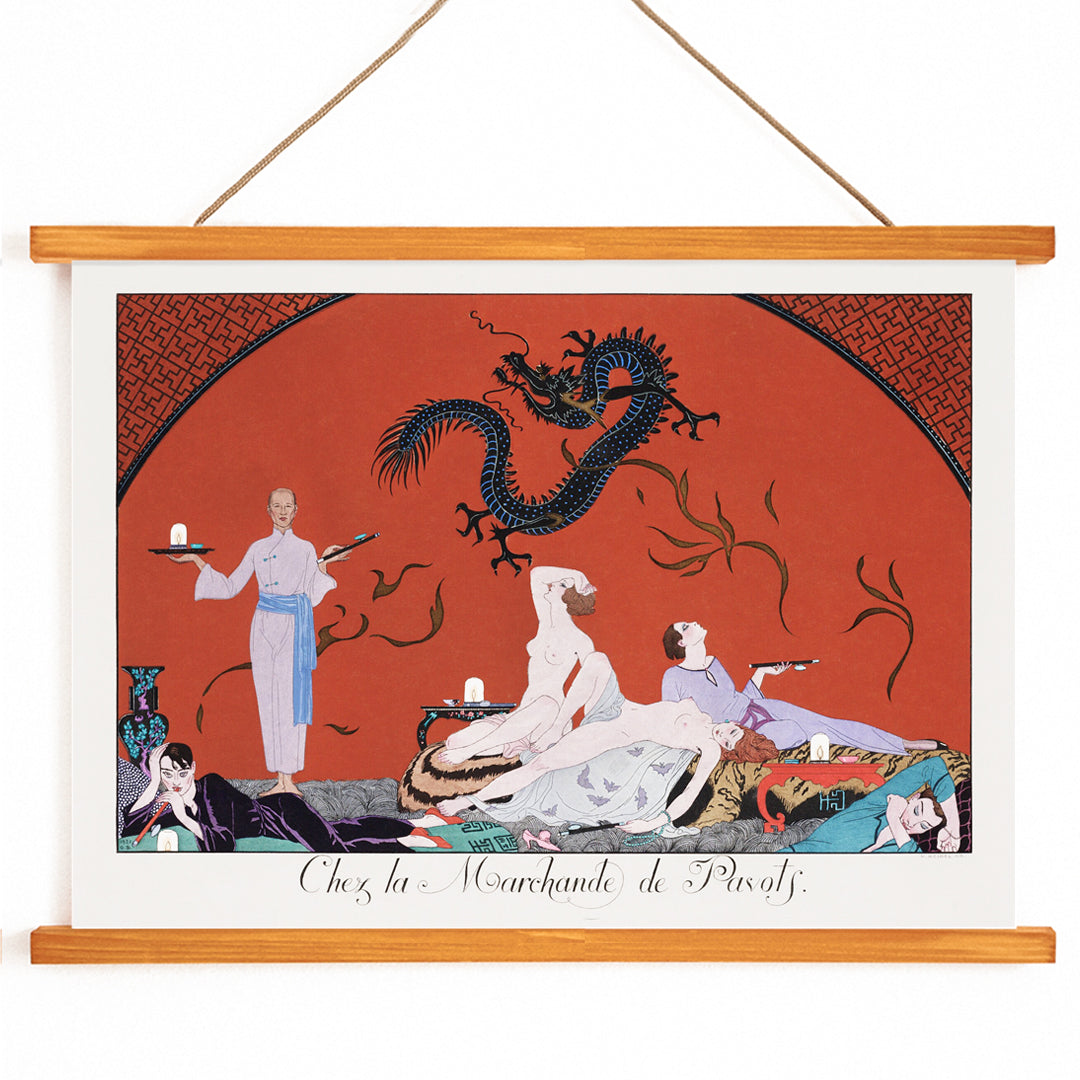
Chez la Marchande de Pavots was created at a time when Parisian society was captivated by themes of exoticism, fantasy, and the pleasures of urban life. Barbier drew inspiration from the vibrant salon culture and the allure of theatrical settings, crafting scenes that evoke the cultivated escapism of the 1920s. This work reflects the era's fascination with transforming everyday moments into refined, imaginative tableaux that blur the boundaries between reality and performance.
The image does not depict a literal shop but instead conjures a dreamlike vignette, inviting viewers into a world where leisure and beauty are central to modern existence. It embodies the spirit of Art Deco, where art and life intermingle in a celebration of style and sophistication.
Style & Characteristics
The poster features elegantly posed figures lounging in an intimate, stylized interior, with a striking blue dragon motif that introduces an element of myth and spectacle. Barbier employs crisp outlines and smooth, flat color fields reminiscent of stencil work, a signature of Art Deco illustration.
The color palette is dominated by deep blue, vivid red, black, and white, creating a dramatic yet harmonious composition. The overall mood is both seductive and serene, with a sense of theatricality that makes the piece stand out as a decorative statement. This work exemplifies the refined graphic sensibility of early twentieth-century Paris.
In Interior Design
This vintage poster is well suited to living rooms, bedrooms, or dressing areas where a touch of Parisian glamour is desired. It pairs beautifully with lacquered wood, brass accents, and velvet textiles, and can serve as a focal point within a gallery wall of fashion or theatre-inspired art.
For color coordination, echo the rich blues with ceramics or fabrics, and highlight the reds in smaller accessories such as cushions or books. The piece also complements oriental inspired wall decor, especially in interiors featuring mythic motifs and decorative patterns.