


You may also like
-
The Cocoanuts Poster
Eric Rohman · 1929 · Art Deco swimmer movie poster with bold coastal colors and crisp, playful lettering
Poster from CHF 9 · Framed from CHF 16
Regular price From CHF 6.00Regular price -
Where East is East Poster
Eric Rohman · 1929 · Dramatic movie poster of Lupe Velez playing a string instrument in vivid red and yellow
Poster from CHF 9 · Framed from CHF 16
Regular price From CHF 6.00Regular price -
Tarzan the Ape Man Poster
Eric Rohman · 1933 · Dramatic jungle poster featuring Tarzan carrying Jane through lush green foliage
Poster from CHF 9 · Framed from CHF 16
Regular price From CHF 6.00Regular price -
A Daughter of Destiny Poster
Eric Rohman · 1928 · Art Deco movie poster with a poised woman in a radiant yellow dress
Poster from CHF 9 · Framed from CHF 16
Regular price From CHF 6.00Regular price


-

"Very nice Posters. The quality is amazing and we received it very quickly !"
-

"A shop to visit absolutely. Huge selection of posters. We spent more than an hour there !"
-

"Perfect to find gift. Price are very good. An they can frame and pack it on site"


About the Artist
Eric Rohman was a prominent Swedish illustrator and poster artist active during the early twentieth century, particularly known for his contributions to the Art Deco movement. His work emerged at a time when posters played a crucial role in urban visual culture, serving both as advertising and as a reflection of contemporary entertainment trends. Rohman's distinctive style helped shape the visual identity of European theater and nightlife during a period of rapid social change.
His posters are often referenced in discussions of classic advertising and performance art, blending commercial appeal with artistic innovation. Rohman's legacy continues to influence graphic designers and collectors interested in the history of modern visual communication.
The Artwork
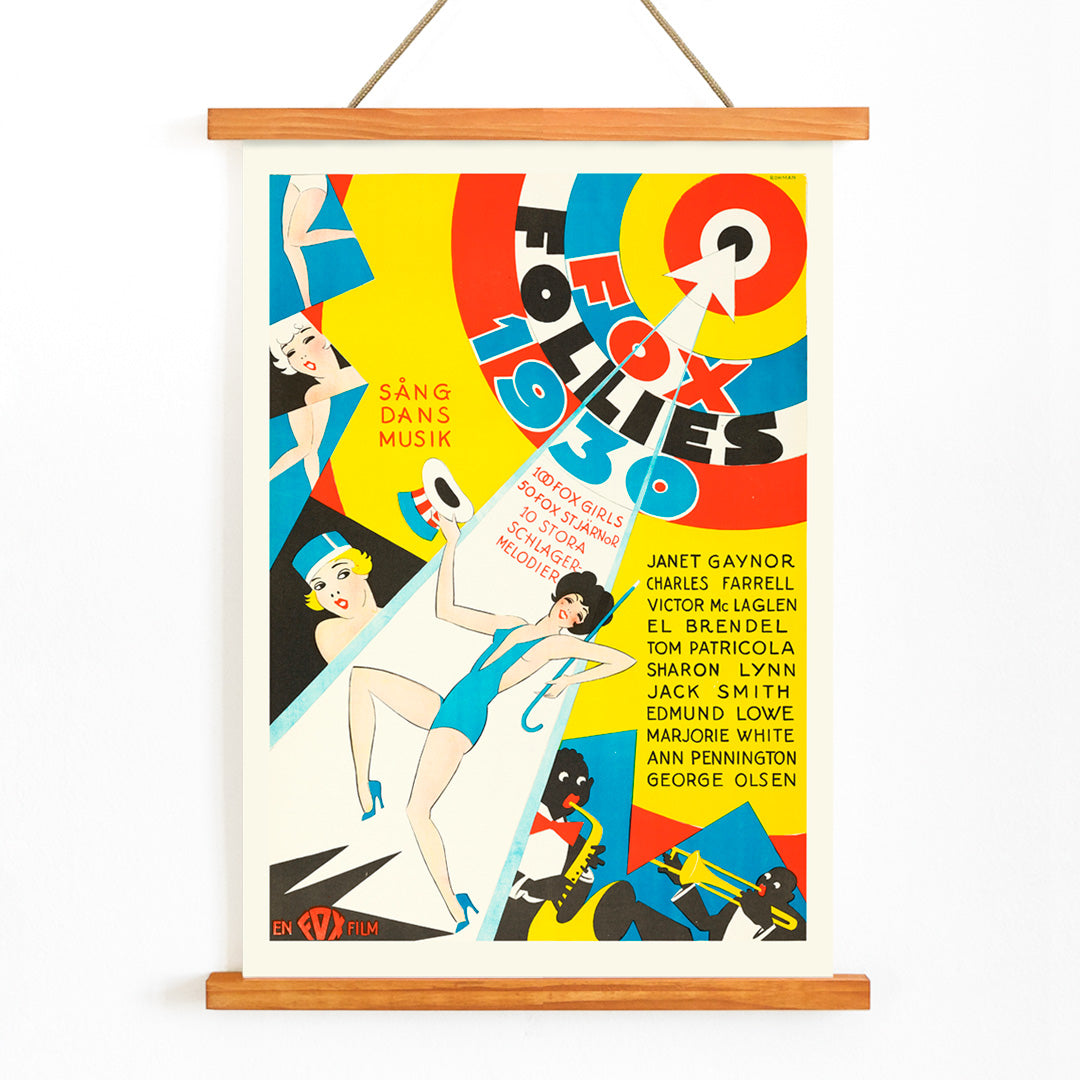
Follies of 1930 was created to promote a revue show, capturing the vibrant atmosphere of interwar stage entertainment. At a time when theatrical revues were a centerpiece of urban nightlife, such posters needed to stand out in crowded cityscapes and immediately convey the excitement of live performance. This artwork reflects the era's fascination with spectacle, rhythm, and the collective experience of music and dance.
The poster not only functioned as an announcement but also as a celebration of the energy and optimism that characterized early 1930s entertainment culture. Today, it offers a glimpse into the world of historic stage productions and the graphic strategies used to attract audiences, making it a favorite among enthusiasts of music and performance history.
Style & Characteristics
The composition is unmistakably Art Deco, featuring stylized dancers and musicians rendered in bold, geometric forms. Dynamic diagonals and sweeping curves suggest movement and musical rhythm, while the figures are outlined with strong black contours for maximum clarity. The palette is dominated by vivid red, yellow, blue, black, and white, creating striking contrasts and a festive mood.
Typography is seamlessly integrated into the design, reinforcing the poster's graphic unity. The overall effect is lively and architectural, with a sense of theatrical flair that is both modern and timeless. This visual approach exemplifies the clarity and impact expected of street posters from the era.
In Interior Design
This Art Deco poster brings a burst of energy to interiors, making it ideal for living rooms, creative studios, or music-themed spaces. Its bold colors and rhythmic composition pair well with mid-century or eclectic furnishings, and it can serve as a dynamic focal point in both contemporary and vintage-inspired settings.
Accent the primary colors through textiles or accessories, and use the graphic black and white elements to tie in with neutral backgrounds. For a cohesive gallery wall, combine it with other classic art pieces or frame it with sleek frames to highlight its striking design.