




-

"Very nice Posters. The quality is amazing and we received it very quickly !"
-

"A shop to visit absolutely. Huge selection of posters. We spent more than an hour there !"
-

"Perfect to find gift. Price are very good. An they can frame and pack it on site"


About the Artist
By an unknown artist, this 1910 hemp plate carries the name of the Moscow publishing house that issued it. T-va I. D. Sytina refers to the publishing partnership of Ivan Dmitrievich Sytin, not to the person who drew the plant. Sytin built a wide readership through affordable books, and illustrated educational material formed part of that business. That history gives the botanical art print a different point of departure from a signed drawing. The credit preserves the name under which the plate reached its readers, even though it does not tell us who made the illustration.
The Artwork
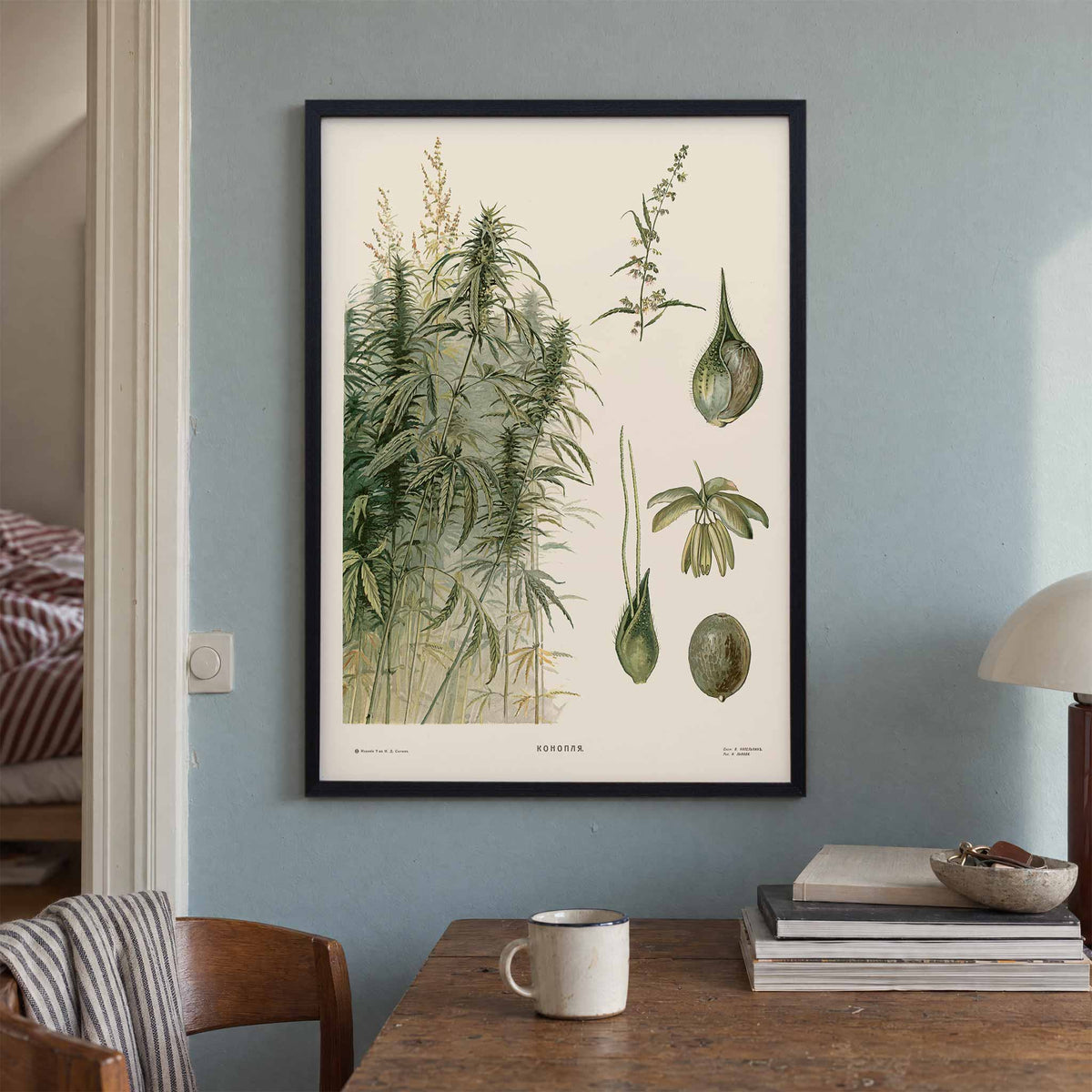
Thornapple is the title under which this vintage poster is listed, but the Russian name on the original plate identifies the plant as hemp. The two names refer to different plants, and the distinction matters for a scientific illustration whose purpose is to aid identification. Hemp was long cultivated for fibre, so readers might have known it as a crop before encountering it as a specimen. The plate asks them to look beyond its everyday use and consider how the plant reproduces. That shift from familiar crop to object of study is the idea behind this botanical illustration.
Style & Characteristics
Slender stalks rise through layers of olive green on the left, where narrow, serrated leaflets cross one another. Near the base, the foliage thins enough to expose the pale stems. The eye moves across the cream ground to a flowering sprig, then down to an enlarged open flower whose long anthers hang beneath it. At the lower right, fine mottling gives the oval seed the look of a small pebble. The soft shading on these separate studies lets their contours register against the paper, while the crowded foliage across the plate keeps drawing the eye back.
In Interior Design
Above an oak writing desk in a study, this vertical poster brings a patch of deep green to a pale plaster wall. A narrow dark frame picks up the darkest lines in the foliage without closing in on the finer studies. From the desk chair, the rim of the open flower is near enough to trace with the eye during a pause in reading. In this setting, the botanical wall art gives the desk a point of focus without crowding its surface. Keep the space directly beneath the print clear so the lower seed study is easy to see.