


You may also like
-

Hærdaceous Peony Poster
Ogawa Kazumasa · 1896 · Serene botanical print of white peony blossoms with deep green leaves on cream
Poster from CHF 9 · Framed from CHF 16
-

Lotus Flowers Poster
Ogawa Kazumasa · 1892 · Serene lotus flower print blending soft pink blooms with calm blue water
Poster from CHF 9 · Framed from CHF 16
-

Monochrome lotus flower Poster
Ogawa Kazumasa · 1896 · Serene lotus art print with glowing petals set against soft monochrome tones
Poster from CHF 9 · Framed from CHF 16
-

Lily Poster
Kazumasa Ogawa · 1896 · Delicate lily botanical print with hand-tinted petals and soft neutral background
Poster from CHF 9 · Framed from CHF 16


-

"Very nice Posters. The quality is amazing and we received it very quickly !"
-

"A shop to visit absolutely. Huge selection of posters. We spent more than an hour there !"
-

"Perfect to find gift. Price are very good. An they can frame and pack it on site"


About the Artist
Ogawa Kazumasa was a pioneering Japanese photographer and printer of the Meiji era, renowned for introducing advanced photomechanical techniques to Japanese publishing. He played a crucial role in documenting Japanese life and nature at a time of rapid modernization, making art and photography accessible to a wider audience through beautifully produced albums and prints.
His innovative approach combined Western photographic methods with traditional Japanese aesthetics, resulting in works that are both technically accomplished and artistically refined. Today, his legacy endures in collections of photography prints and in the appreciation of Japanese botanical art worldwide.
The Artwork
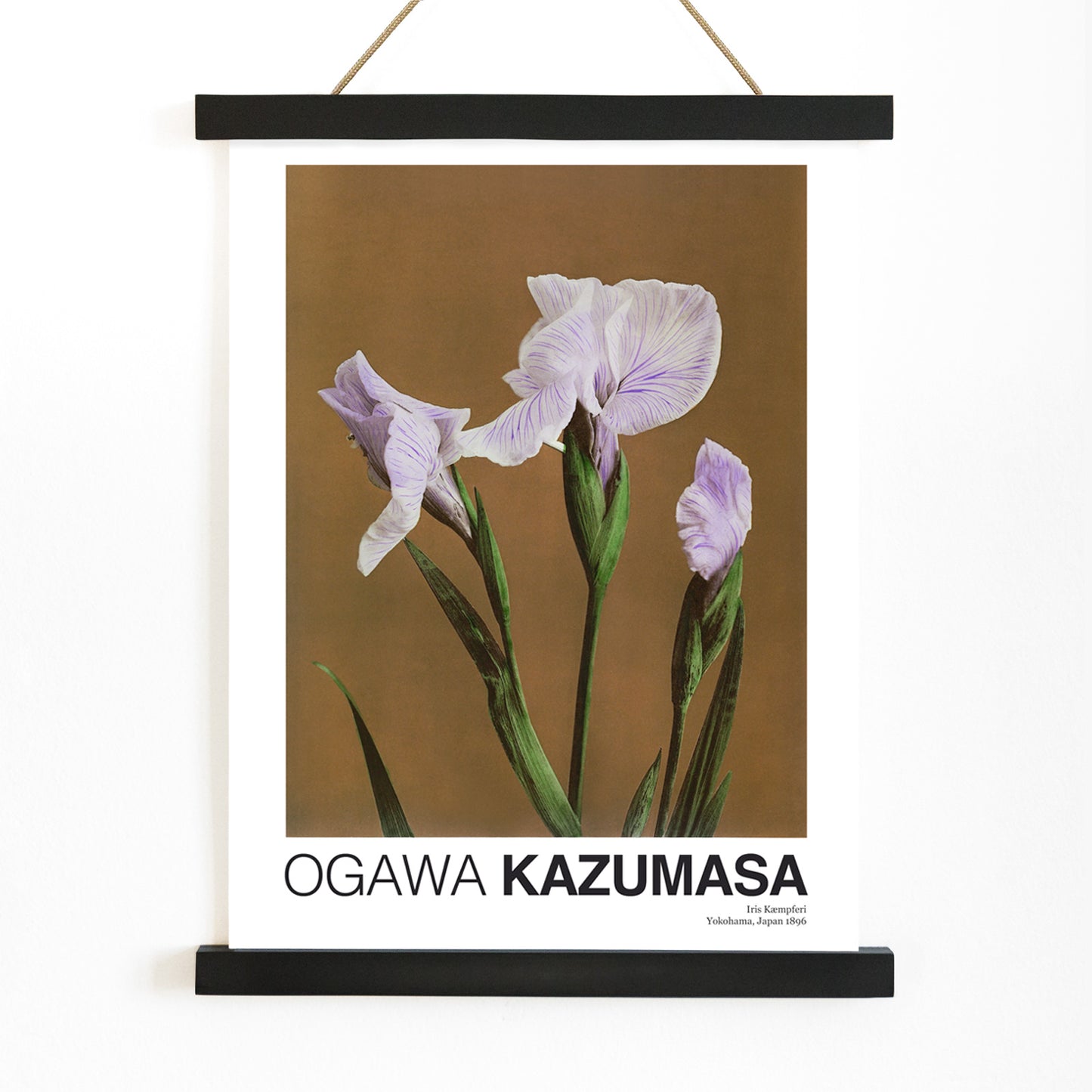
This depiction of Iris Kæmpferi reflects the Meiji period's fascination with native flora and the desire to celebrate Japanese natural heritage in a modern context. Created for inclusion in a deluxe botanical album, the print was intended to showcase the beauty and diversity of Japanese plants to both domestic and international audiences.
The iris, a symbol of renewal and elegance in Japanese culture, is presented here not only as a scientific specimen but also as an object of quiet contemplation. The work embodies the era's blend of tradition and innovation, capturing the spirit of a nation in transition.
Style & Characteristics
The print features a single iris plant with tall, slender green leaves and delicate purple blossoms, rendered with precise hand-coloring. The composition is vertical and uncluttered, allowing the plant to stand out against a pale, softly textured background.
Subtle gradations of purple, green, and brown create a harmonious palette, while the careful detailing of petals and stems highlights the artist's technical skill. The overall effect is serene and understated, characteristic of Japanese botanical illustration from this period.
In Interior Design
This iris botanical print brings a sense of calm and refinement to interiors, making it ideal for bedrooms, studies, or tranquil living spaces. Its vertical format is especially suited to narrow walls or as part of a gallery arrangement.
Pair it with other botanical wall art or Japanese-inspired prints for a cohesive look. The gentle colors complement neutral palettes and natural materials, enhancing both minimalist and classic decor styles.