


You may also like
-
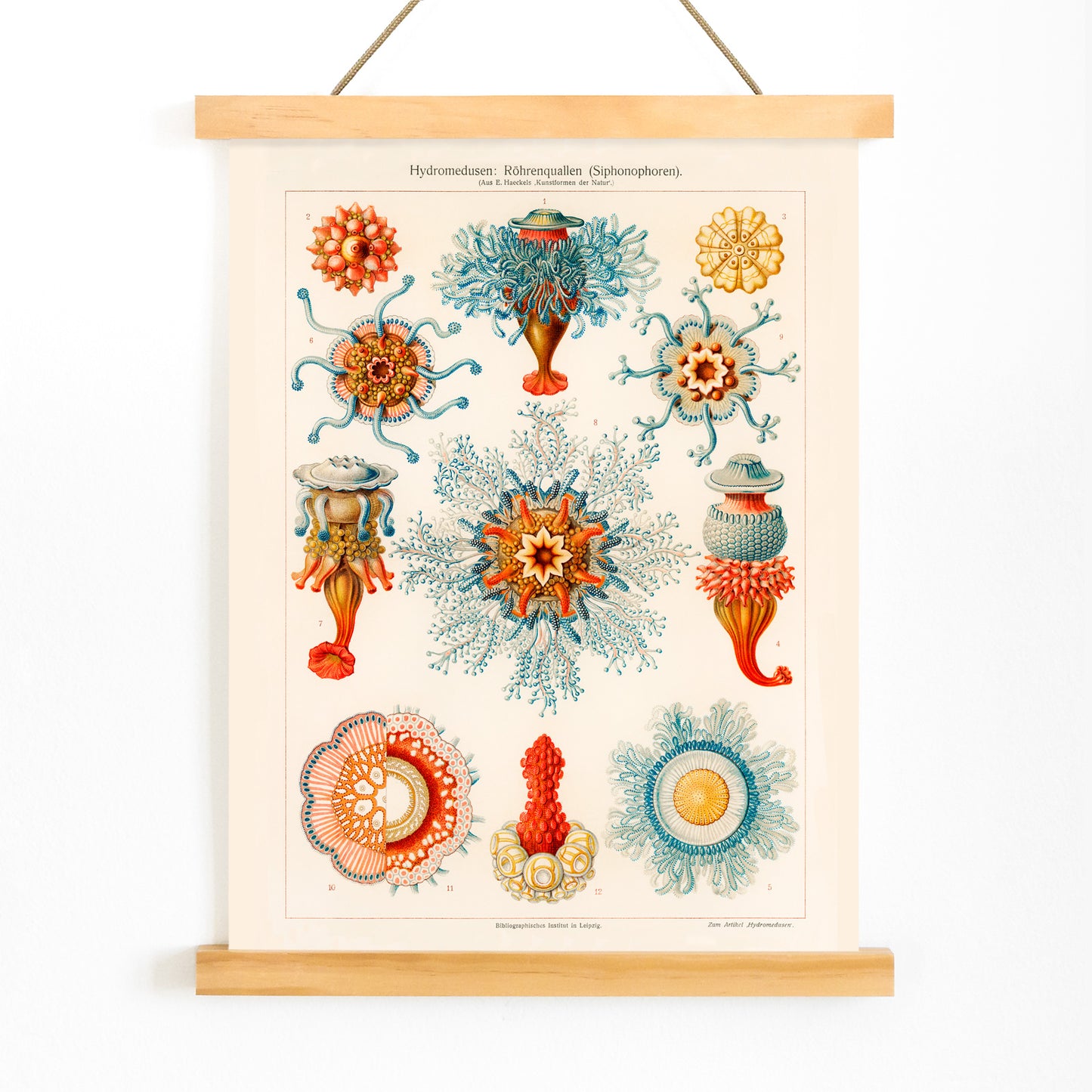
Siphonophorae Poster
Ernst Haeckel · 1866 · Intricate siphonophore scientific print with floating forms in crisp blues and reds
Poster from CHF 9 · Framed from CHF 16
Regular price From CHF 6.00Regular price -
Peromedusae Poster
Ernst Haeckel · 1904 · Intricate jellyfish scientific print with floating bells and lace-like tentacles
Poster from CHF 9 · Framed from CHF 16
Regular price From CHF 6.00Regular price -
Ascidiae Poster
Ernst Haeckel · 1904 · Intricate sea squirt scientific print arranged in a striking symmetrical natural history plate
Poster from CHF 9 · Framed from CHF 16
Regular price From CHF 6.00Regular price -
Trachomedusae Poster
Ernst Haeckel · 1904 · Intricate jellyfish scientific print with flowing tentacles and natural sea-toned translucency
Poster from CHF 9 · Framed from CHF 16
Regular price From CHF 6.00Regular price


-

"Very nice Posters. The quality is amazing and we received it very quickly !"
-

"A shop to visit absolutely. Huge selection of posters. We spent more than an hour there !"
-

"Perfect to find gift. Price are very good. An they can frame and pack it on site"


About the Artist
Ernst Haeckel was a German biologist, philosopher, and pioneering scientific illustrator whose work at the turn of the 20th century shaped public understanding of marine life. His illustrations bridged the gap between scientific research and visual art, making the wonders of the microscopic world accessible and inspiring to a broad audience.
Haeckel’s plates, now valued as science wall art, also influenced the Art Nouveau movement, as artists and architects drew on his nature-based forms for their own designs. His legacy endures in both scientific and artistic circles, where his images continue to captivate viewers.
The Artwork
Completed in 1904, this jellyfish illustration was part of Haeckel’s monumental effort to document and share the diversity of ocean life. At a time when deep-sea exploration was capturing the public imagination, such works offered a window into mysterious underwater realms, sparking curiosity about evolution and the interconnectedness of living forms.
For contemporary audiences, the print stands as a testament to the era’s fascination with discovery and the belief that nature’s complexity could be both studied and admired. It remains a compelling example for collectors of sea and ocean art.
Style & Characteristics
The artwork features a meticulously organized arrangement of several jellyfish, each rendered with precise linework and delicate shading. The translucent bodies are depicted in cool blues, accented by touches of red and yellow, all set against a pale background that enhances their ethereal quality.
Haeckel’s attention to anatomical detail is balanced by an almost decorative sense of composition, lending the print a serene and slightly otherworldly mood. The interplay of color and form creates a vintage natural history print that is both scientifically accurate and visually striking.
In Interior Design
This scientific print complements coastal-inspired interiors, minimalist spaces, and study areas where intricate detail can be appreciated. Its calming palette and organic forms make it suitable for bathrooms, hallways, or living rooms, where it introduces a sense of tranquil movement.
To harmonize with the artwork, consider pairing it with navy or blue textiles, warm metallic accents like brass, and neutral wall colors. Displaying it in a curated frame can further enhance its vintage character within a gallery wall arrangement.