


You may also like
-

Persian 2 Poster
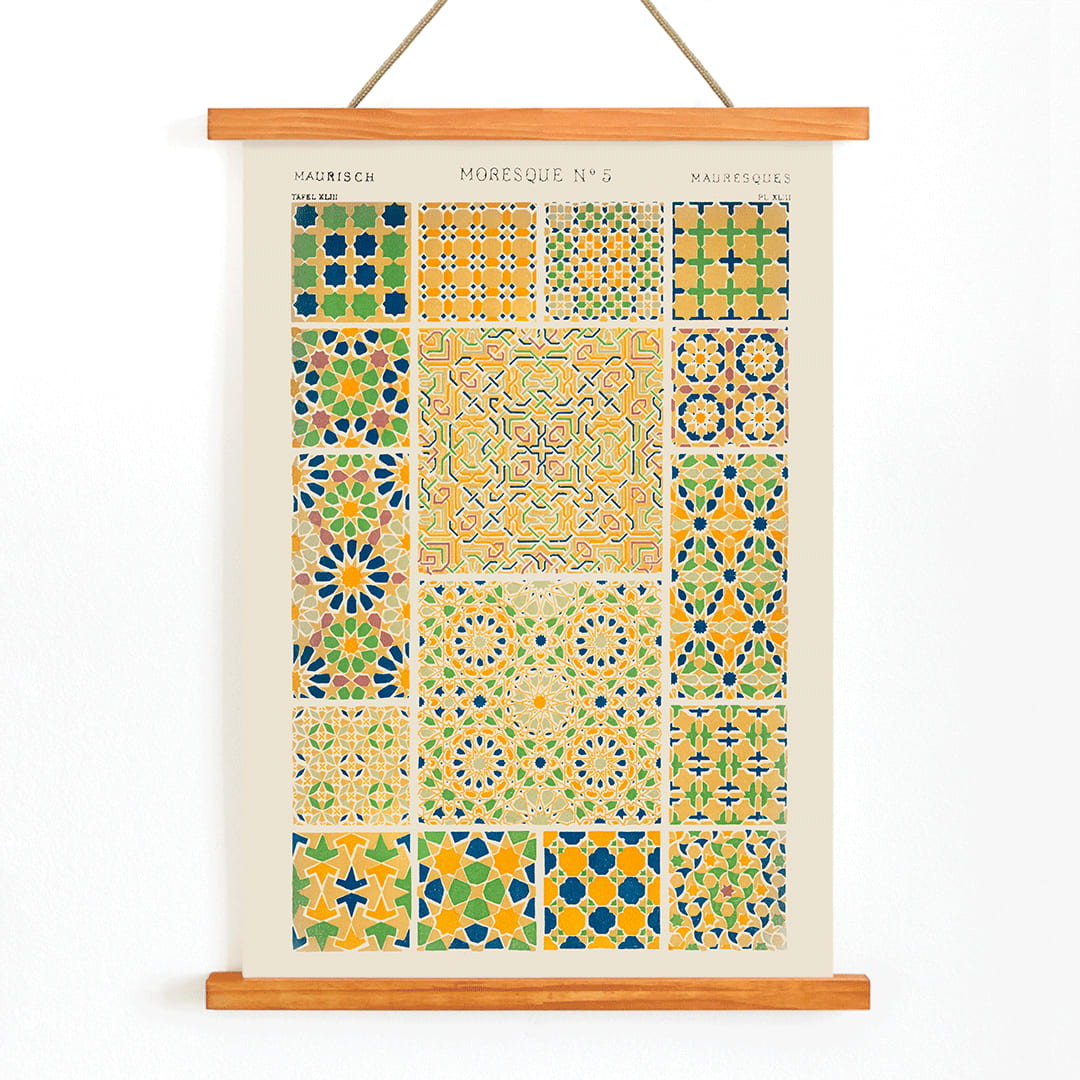
Owen Jones · 1899 · Persian-inspired geometric pattern poster with interlaced motifs in warm red, green, and beige
Poster from CHF 9 · Framed from CHF 16
-

Byzantine 3 Poster
Owen Jones · 1899 · Byzantine geometric pattern poster with crisp symmetry and bold historic color accents
Poster from CHF 9 · Framed from CHF 16
-

Egytian 7 Poster
Owen Jones · 1899 · Striking Egyptian pattern poster with layered geometric motifs in bold red and blue
Poster from CHF 9 · Framed from CHF 16
-

Persian 1 Poster
Owen Jones · 1899 · Ornamental Persian pattern poster with interlaced florals, medallions, and lively jewel tones
Poster from CHF 9 · Framed from CHF 16


-

"Very nice Posters. The quality is amazing and we received it very quickly !"
-

"A shop to visit absolutely. Huge selection of posters. We spent more than an hour there !"
-

"Perfect to find gift. Price are very good. An they can frame and pack it on site"


About the Artist
Owen Jones was a British architect, designer, and pioneering theorist of ornament whose research transformed Victorian approaches to color and pattern. He immersed himself in the study of historic decoration, particularly Islamic and Moorish sources, and played a key role in integrating their principles into modern design education and industry.
Renowned for The Grammar of Ornament, Jones championed the idea that structured harmony and disciplined repetition could create decoration that feels both enduring and innovative. His influence continues to resonate with admirers of famous artists and design history.
The Artwork
Moresque 5 reflects the late nineteenth-century fascination with global ornament, a period when museums, world expositions, and advances in printing technology fueled demand for decorative models. Such patterns were widely used as reference material by architects, textile designers, and interior decorators eager to incorporate authentic historical motifs into their work.
This design does not depict a specific place or narrative, but instead adapts Moorish geometric principles into a versatile system, highlighting ornament as a thoughtful and intellectual craft. As a vintage pattern poster, it embodies the Victorian belief that well-designed decoration could elevate everyday environments.
Style & Characteristics
The artwork features a precise geometric composition with interlaced stars and polygons arranged in a symmetrical, repeating pattern. The design is defined by crisp outlines and flat planes of color, emphasizing clarity and graphic impact typical of a design plate rather than a painterly scene.
Vivid yellows, greens, blues, and orange accents are set against a white background, creating a lively yet orderly visual rhythm. The energetic mood and intricate structure make it appealing to enthusiasts of ornamental Islamic design and abstract pattern prints.
In Interior Design
This geometric wall art brings a sense of structure and vibrancy to entryways, offices, or dining spaces, where pattern can establish an architectural atmosphere. It complements both modern interiors that appreciate order and eclectic rooms that blend vintage print culture with contemporary furnishings.
To echo the palette, consider warm white walls, natural wood tones, and subtle touches of cobalt, olive, or saffron in textiles. Framed as a decorative art print, it anchors a gallery wall and harmonizes with geometric modernism while preserving its historical character.