


You may also like
-
Two parakeets Poster
Oliver Goldsmith · 1774 · Two parakeets vintage print with vivid green plumage and delicate natural history detail
Poster from CHF 9 · Framed from CHF 16
Regular price From CHF 6.00Regular price -
Polytelis Alexandrae Poster
Unknown artist · 1873 · Elegant parakeet print featuring two long-tailed birds in fresh green and rose hues
Poster from CHF 9 · Framed from CHF 16
Regular price From CHF 6.00Regular price -
Macaws Poster
Unknown artist · 1893 · Vivid macaws print with lush rainforest foliage and crisp natural history detail
Poster from CHF 9 · Framed from CHF 16
Regular price From CHF 6.00Regular price -
Rose-hill Parakeet Poster
Elizabeth Gould · 1825 · Detailed parakeet print with bright plumage perched on delicate branches
Poster from CHF 9 · Framed from CHF 16
Regular price From CHF 6.00Regular price


-

"Very nice Posters. The quality is amazing and we received it very quickly !"
-

"A shop to visit absolutely. Huge selection of posters. We spent more than an hour there !"
-

"Perfect to find gift. Price are very good. An they can frame and pack it on site"


About the Artist
George Edwards was an English naturalist and illustrator whose work became foundational for eighteenth-century ornithology. His detailed bird studies were created during a period of intense scientific curiosity, as European scholars and collectors sought to document and understand the diversity of the natural world. Edwards's illustrations bridged the gap between art and science, providing both beauty and accuracy for natural history enthusiasts.
For those interested in historic illustration, his works are often displayed alongside other famous artists of the era.
The Artwork
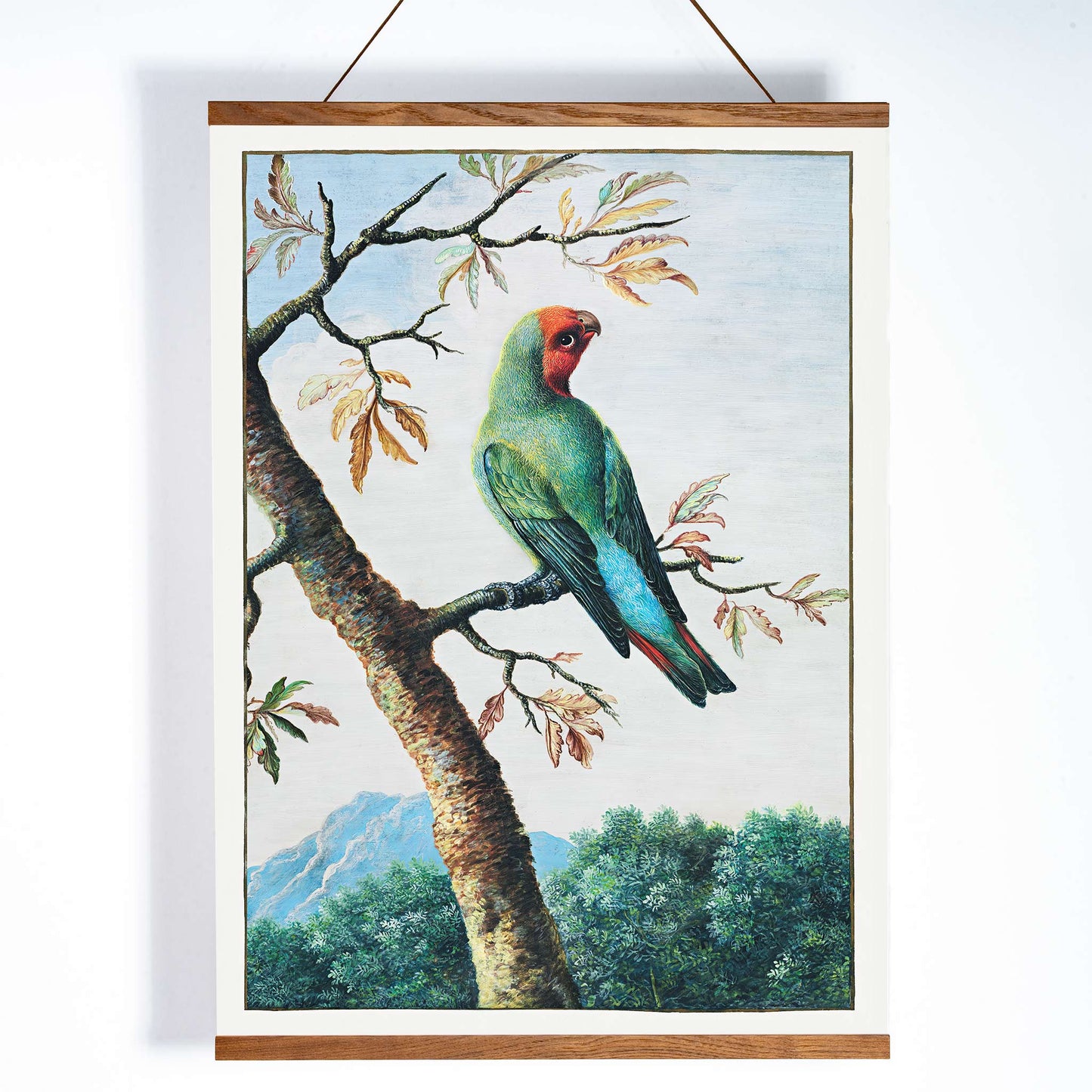
This bird study was produced as part of the Enlightenment movement, when naturalists aimed to catalog and communicate knowledge about new species. Before photography, such hand-colored plates served as vital references, enabling scholars and collectors to identify and discuss birds with a shared visual language. The artwork reflects the spirit of discovery and the educational mission of early natural history publishing, connecting to the legacy of science illustration.
Style & Characteristics
The image centers on a parrot perched in profile on a branch, set against a pale, uncluttered background. Edwards's fine linework captures the bird's delicate features, while translucent washes of green, red, blue, and yellow bring the feathers to life. The composition is calm and focused, with naturalistic colors and subtle shading that evoke the scholarly precision of eighteenth-century animal prints.
The overall effect is both informative and quietly decorative, making it a classic example of vintage natural history art.
In Interior Design
This vintage print lends an elegant, archival touch to living rooms, studies, or hallways. Its refined palette and detailed rendering suit classic interiors, English-country styles, or modern spaces seeking a sophisticated focal point.
Pair it with natural woods, linen whites, and muted greens or blues for a harmonious look. It also combines beautifully with other animals and botanical prints to create a cohesive natural history display.