




-

"Very nice Posters. The quality is amazing and we received it very quickly !"
-

"A shop to visit absolutely. Huge selection of posters. We spent more than an hour there !"
-

"Perfect to find gift. Price are very good. An they can frame and pack it on site"


About the Artist
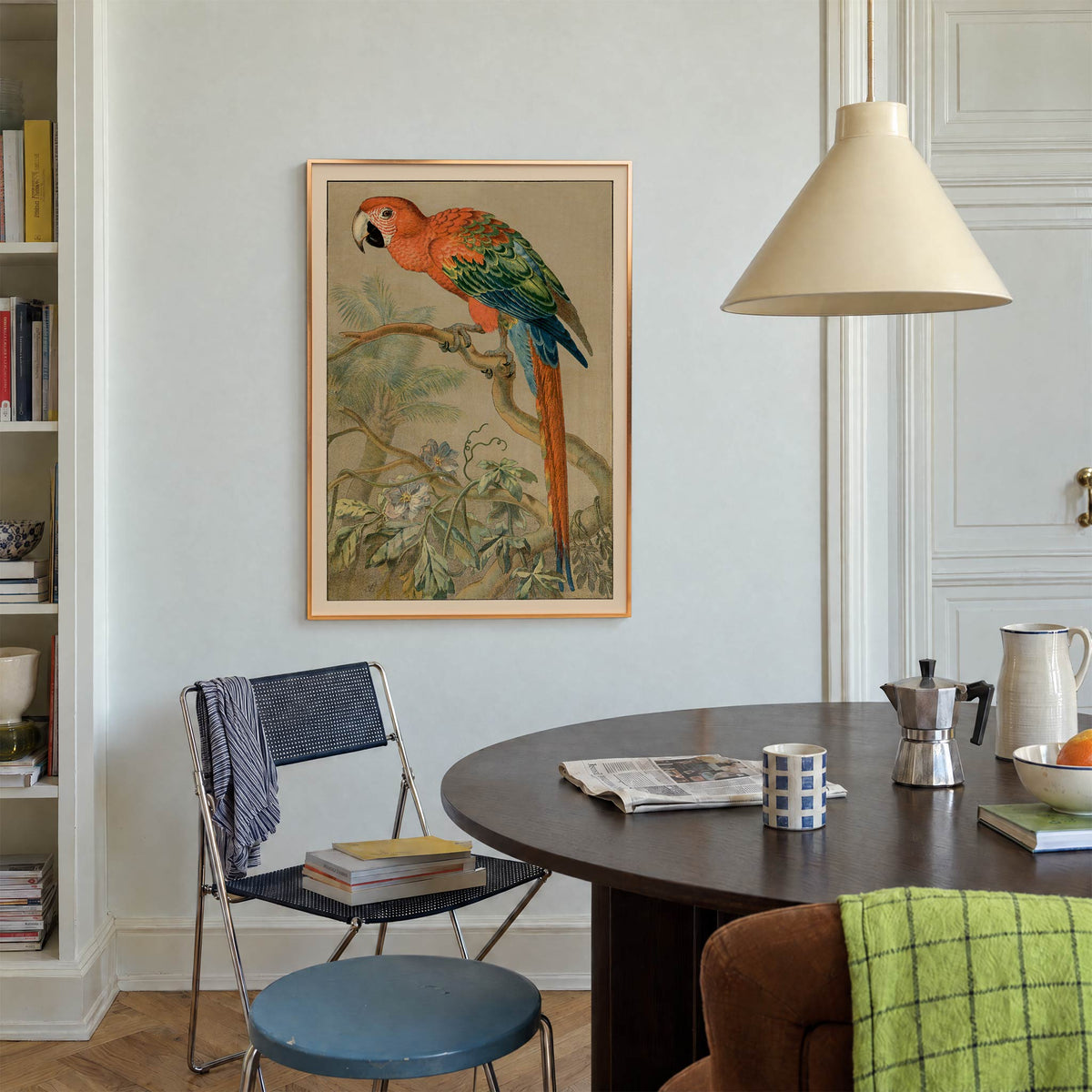
Emil Sachsse brings a tropical bird within studying distance in Parrot, dated 1888. The supplied attribution identifies the artist, but does not establish a biography or an original publication. The bird itself therefore provides the strongest introduction to this Emil Sachsse art print. Its subject connects the image to Victorian natural history illustration, when printed pictures offered encounters with animals that many readers could not observe firsthand. Viewed in that context, this vintage print of a parrot invites sustained attention to one creature rather than presenting an imagined account of the artist behind it.
The Artwork
A printed encounter with a distant animal lies at the heart of Parrot. For a viewer in 1888, such an image could make tropical wildlife accessible without a journey to its habitat. The original commission is not established in the supplied information, so a specific scientific or commercial purpose cannot be confirmed. Instead, this nineteenth-century bird print can be understood through the relationship it proposes between viewer and subject: an opportunity to pause and observe. Its appeal rests on curiosity about the animal, allowing natural history to become a personal encounter rather than merely a label.
Style & Characteristics
A pale upper beak curves over a black lower section, beside an eye surrounded by fine facial lines. Orange-red feathers cover the head and breast, while overlapping green wing feathers lead the eye toward dark blue tips. Grey toes clasp the branch beneath the body. The long tail descends through much of the picture, its orange centre ending in narrow blue points. Muted leaves and small flowers gather below, while pale palm fronds recede behind the perch. The aged beige ground softens these details, making the bird the strongest colour presence in this natural history print.
In Interior Design
Imagine this vertical poster above a leather chair in a reading corner, where a walnut bookcase gives the orange-red plumage a dark backdrop. A slim black frame would echo the deeper wing feathers without competing with the bird. Leave open wall around the image so the long tail can be followed from the chair to its blue tips. For home decor centred on close observation, the fine art print offers details worth returning to between pages. This approach to interior decoration gives vintage poster imagery a specific role: wall art that invites a slower look.