


You may also like
-

Forms of leaves Poster
Marcius Willson · 1890 · Educational leaf anatomy print with labeled forms and gentle green botanical tones
Poster from CHF 9 · Framed from CHF 16
-

Familiar colors Poster
Marcius Willson · 1890 · Educational color chart poster featuring geometric squares and triangles in vivid primary colors
Poster from CHF 9 · Framed from CHF 16
-

The Chromatic scale of colors Poster
Marcius Willson · 1890 · Meticulously labeled chromatic color wheel poster with crisp geometry and vivid spectrum
Poster from CHF 9 · Framed from CHF 16
-

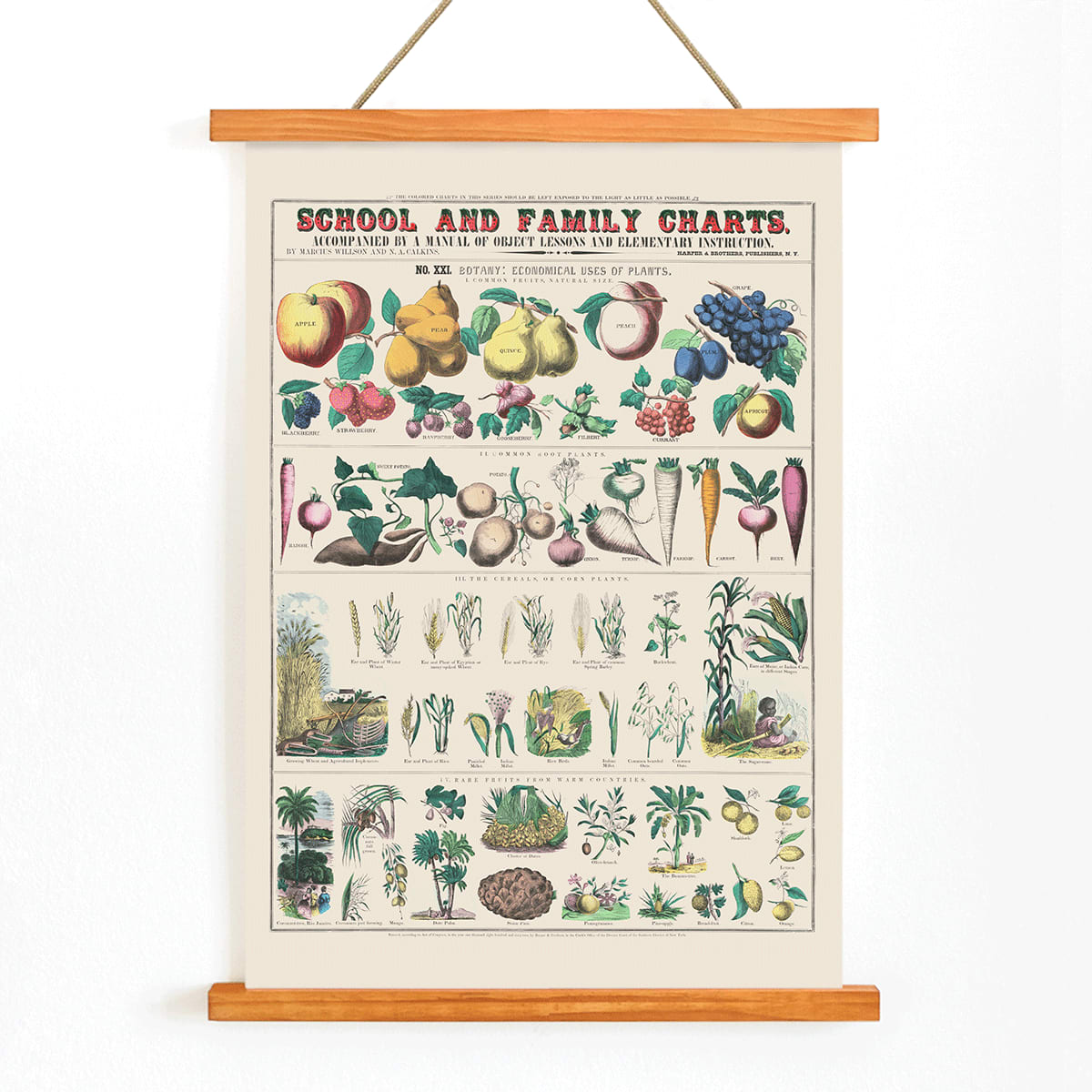
Economical uses of plants Poster
Norman A. Calkins · 1890 · Vintage educational botanical print mapping useful plants and everyday products in labeled vignettes
Poster from CHF 9 · Framed from CHF 16


-

"Very nice Posters. The quality is amazing and we received it very quickly !"
-

"A shop to visit absolutely. Huge selection of posters. We spent more than an hour there !"
-

"Perfect to find gift. Price are very good. An they can frame and pack it on site"


About the Artist
Marcius Willson was an American educator and textbook author whose illustrated teaching materials played a significant role in shaping nineteenth-century classroom learning. At a time when public education was expanding, Willson advocated for the use of clear visual aids to make science, geography, and practical knowledge more accessible. His educational charts, such as this one, reflect a commitment to transforming complex information into engaging and memorable visuals.
Today, Willson's charts are valued both as historical artifacts and as refined wall art that brings a sense of curiosity and intellectual order to interiors.
The Artwork
Economical use of plants was created as a teaching chart to demonstrate how various plants contribute to daily life, commerce, and industry. In 1865, there was a growing public interest in understanding the origins and practical uses of natural resources. This educational print was designed to help viewers connect everyday products to their botanical sources, fostering a deeper appreciation for the role of plants in society.
The chart stands as a testament to nineteenth-century efforts to blend scientific knowledge with practical education, and it naturally complements other science wall art for a cohesive gallery display.
Style & Characteristics
The composition is organized as a reference chart, featuring numerous small, labeled illustrations of plants and their uses, arranged for clarity and comparison. The fine linework and precise shading lend an instructive quality, while selective hand coloring brings warmth and visual interest to the page. The overall effect is archival and scholarly, reminiscent of classic classroom diagrams elevated to art.
The palette combines natural greens and browns with touches of red, yellow, blue, and purple, creating a lively yet orderly rhythm. Those drawn to vintage botanical imagery may also enjoy exploring related botanical prints for similar detail and calm precision.
In Interior Design
This vintage educational chart poster is ideal for spaces that value intelligence and historical charm, such as a home office, library, hallway, or creative studio. Its theme of everyday plant resources also makes it a fitting choice for kitchens or dining areas, especially when paired with natural materials like wood and linen.
For a harmonious look, combine it with warm neutrals, muted greens, and antique brass accents to echo its historical character. It suits modern, rustic, and classic interiors, and layers well with other kitchen wall decor for a curated, lived-in feel.