


You may also like
-

Japanese Tatoo 1 Poster
Raimund von Stillfried · 1877 · Hand tinted studio poster revealing intricate Japanese irezumi across a bare back
Poster from CHF 9 · Framed from CHF 16
-

Woman After a Bath Poster
Goyō Hashiguchi · 1920 · Serene bijin art print capturing a private bathing ritual in delicate shin hanga tones
Poster from CHF 9 · Framed from CHF 16
-

Max After Surfing Poster
Olive Cotton · 1939 · Luminous black-and-white art print of a surfer's torso sculpted by dramatic light
Poster from CHF 9 · Framed from CHF 16
-

Yokugo no onna Poster
Goyō Hashiguchi · 1915 · Refined bathing beauty art print with pale skin, dark hair, and vermilion accents
Poster from CHF 9 · Framed from CHF 16


-

"Very nice Posters. The quality is amazing and we received it very quickly !"
-

"A shop to visit absolutely. Huge selection of posters. We spent more than an hour there !"
-

"Perfect to find gift. Price are very good. An they can frame and pack it on site"


About the Artist
Raimund von Stillfried was an Austrian photographer who became a leading figure in Yokohama’s foreign photography community during the 1860s and 1870s. His work played a significant role in shaping Western perceptions of Japan during the early Meiji era. Stillfried’s studio was known for its carefully composed portraits and genre scenes, often enhanced by hand coloring, which introduced Japanese customs and artistry to audiences abroad.
This photograph is a notable example within our photography art prints collection, reflecting the intersection of documentary precision and artistic interpretation.
The Artwork
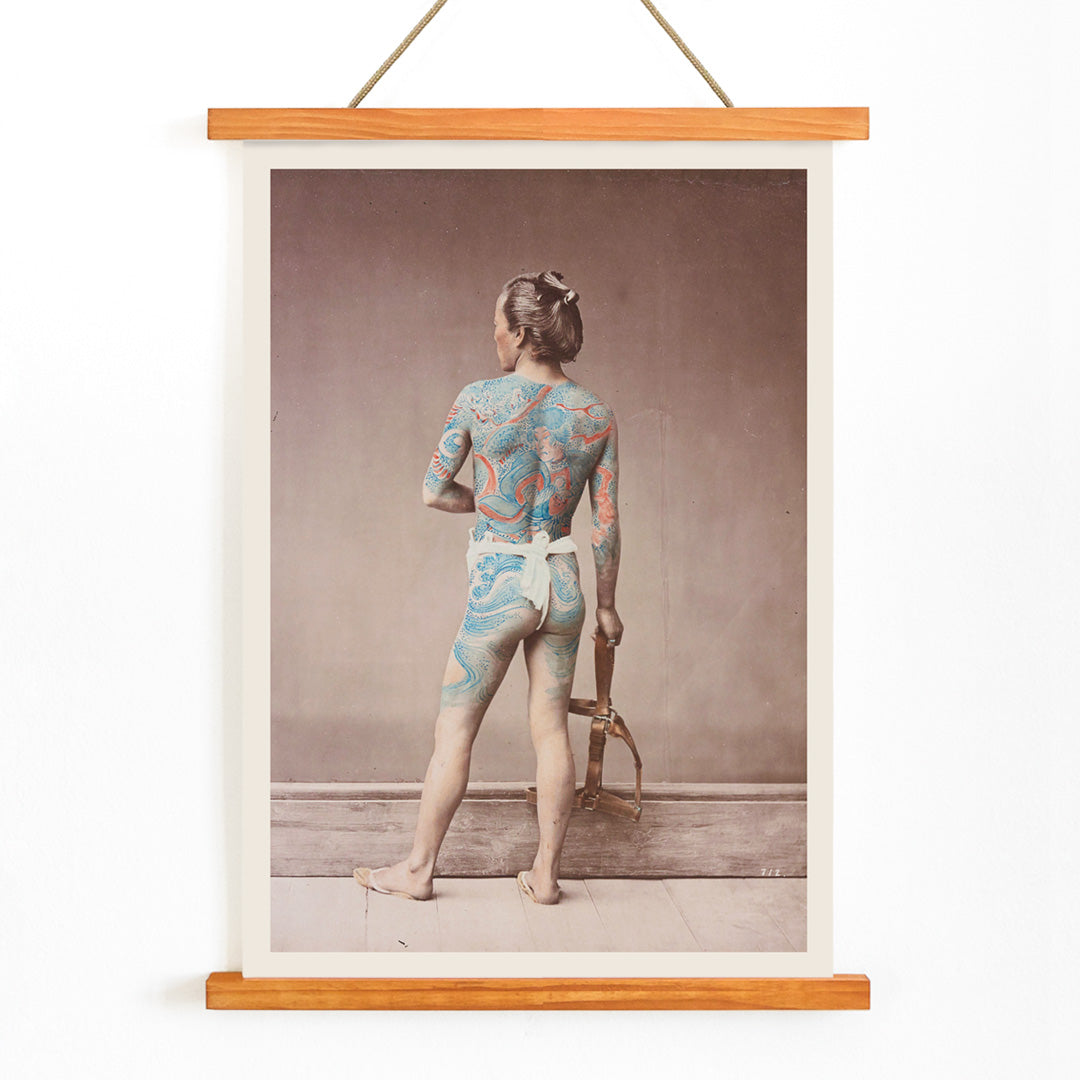
Created in 1877, Japanese Tattoo 2 captures a moment when Japan was undergoing rapid modernization and foreign interest in traditional practices was at its peak. Tattooing, or irezumi, was both a personal statement and a cultural marker, often associated with artisans, performers, and certain social groups. This photograph was intended for inclusion in albums and portfolios collected by travelers and expatriates, serving as a visual record of a practice that fascinated outsiders and held layered meanings within Japanese society.
Through its subject, the image invites viewers to consider the body as a canvas for storytelling, identity, and memory, reflecting the era’s cross-cultural curiosity and the documentation of vanishing traditions.
Style & Characteristics
The photograph features a calm, direct pose characteristic of nineteenth-century studio portraiture, with the subject seated to display his elaborate tattoos. The composition is clear and uncluttered, emphasizing the intricate body art and the sitter’s composed expression. Subtle tonal gradations and crisp details give the image an archival quality, while the overall palette remains soft, with warm neutrals and hints of hand-tinted color that evoke the vintage photographic process.
This restrained, contemplative atmosphere makes the work suitable for pairing with Japanese-inspired wall decor and beige-toned prints, enhancing interiors with a sense of quiet sophistication and historical resonance.
In Interior Design
As a Japanese tattoo poster, this piece brings a distinctive narrative element to living rooms, hallways, or offices, especially where there is an appreciation for photographic history or body art. It complements both minimalist and eclectic interiors, working well alongside modern furnishings and curated vintage accents.
For a harmonious look, combine its warm neutral tones with natural wood, linen, or matte black frames, or highlight subtle color accents already present in your space. This print appeals to collectors, design enthusiasts, and anyone interested in the intersection of tradition, artistry, and visual storytelling.